Cadro Tail Lift Buyer Guide
How to Choose a Lightweight Level-Ride Tail Lift for Urban Distribution and Courier Fleets
A practical article for city-route fleet buyers comparing payload efficiency, rear-door access, cart stability, dock compatibility, and maintenance-friendly tail-lift design.
lightweight level-ride tail lift
Urban distribution fleets, courier operators, city-route truck buyers, vehicle upfitters
Compact folding design, stable hydraulic lifting, guided movement, maintenance-friendly structure
Urban distribution fleets do not buy a tail lift the same way that long-haul or occasional-loading fleets do. In courier, parcel, and city-route delivery work, the liftgate directly affects route speed, payload logic, rear-door access, cart handling, and how much downtime the fleet can absorb before deliveries start slipping.
That makes a lightweight level-ride tail lift a strong independent-site topic for Cadro. Public manufacturer pages keep pointing toward the same buying logic: a fold-away platform matters when the truck still needs dock access, a level platform matters when the load is top-heavy or cart-based, and serviceability matters because route fleets depend on daily uptime. Public marketplace pages still focus mainly on generic parameters. That leaves room for Cadro to publish a more useful buyer guide.
Start with route logic, not just lifting capacity
A city-delivery truck may load at a dock in the morning, unload to street level at the next stop, and repeat that cycle all day. In that workflow, the first buying question should not be capacity alone. The better question is how the tail lift affects the route.
- Does the truck still need clean rear access at a dock?
- Will the route rely heavily on parcel carts, roll cages, or pallet jacks?
- Is payload efficiency important enough to prioritize a lighter platform concept?
- Will a slow maintenance turnaround directly disrupt daily route performance?
Why lightweight construction matters in urban fleets
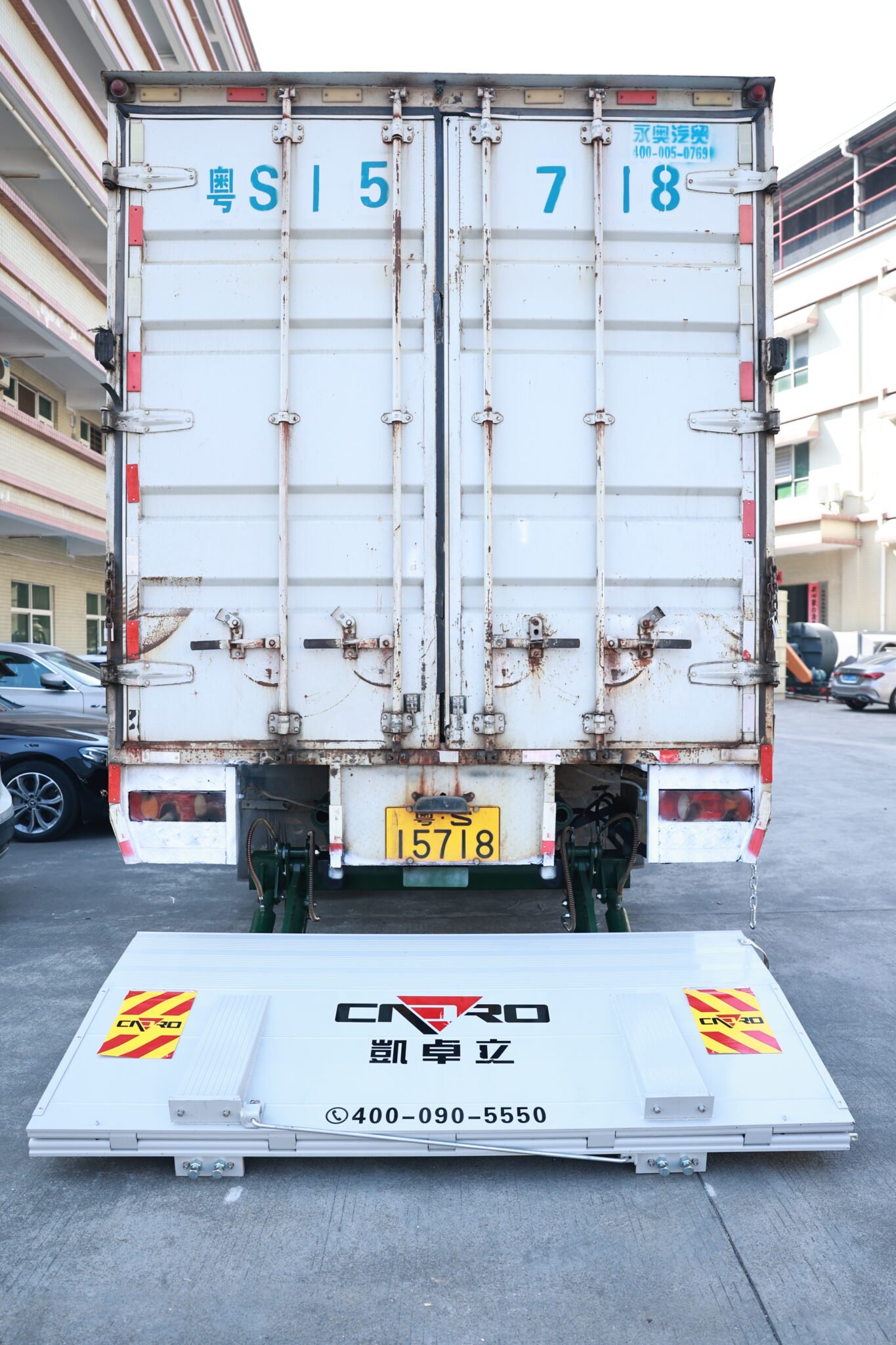
For urban fleets, every kilogram can influence payload planning and route economics. A lighter system can help protect usable payload while still supporting daily loading cycles. That does not mean choosing the lightest platform without context. It means balancing platform mass, route intensity, load type, and structural practicality.
This is especially relevant for courier operators, rental fleets, and city-route box trucks where route density, stop frequency, and practical uptime matter as much as a headline capacity number.
Level ride is a real operating requirement
Public manufacturer language makes this point clearly: level ride and suitability for top-heavy carts are operating features, not decorative specification lines. Courier fleets often move roll cages, stacked parcel carts, and mixed loads that become awkward if platform travel feels inconsistent.
A buyer should actively confirm whether the platform stays predictably level from truck floor to ground, whether it fits roll-cage handling, and whether operators can work quickly without fighting lift geometry during repetitive daily use.
Dock access and fold-away storage should be specified early
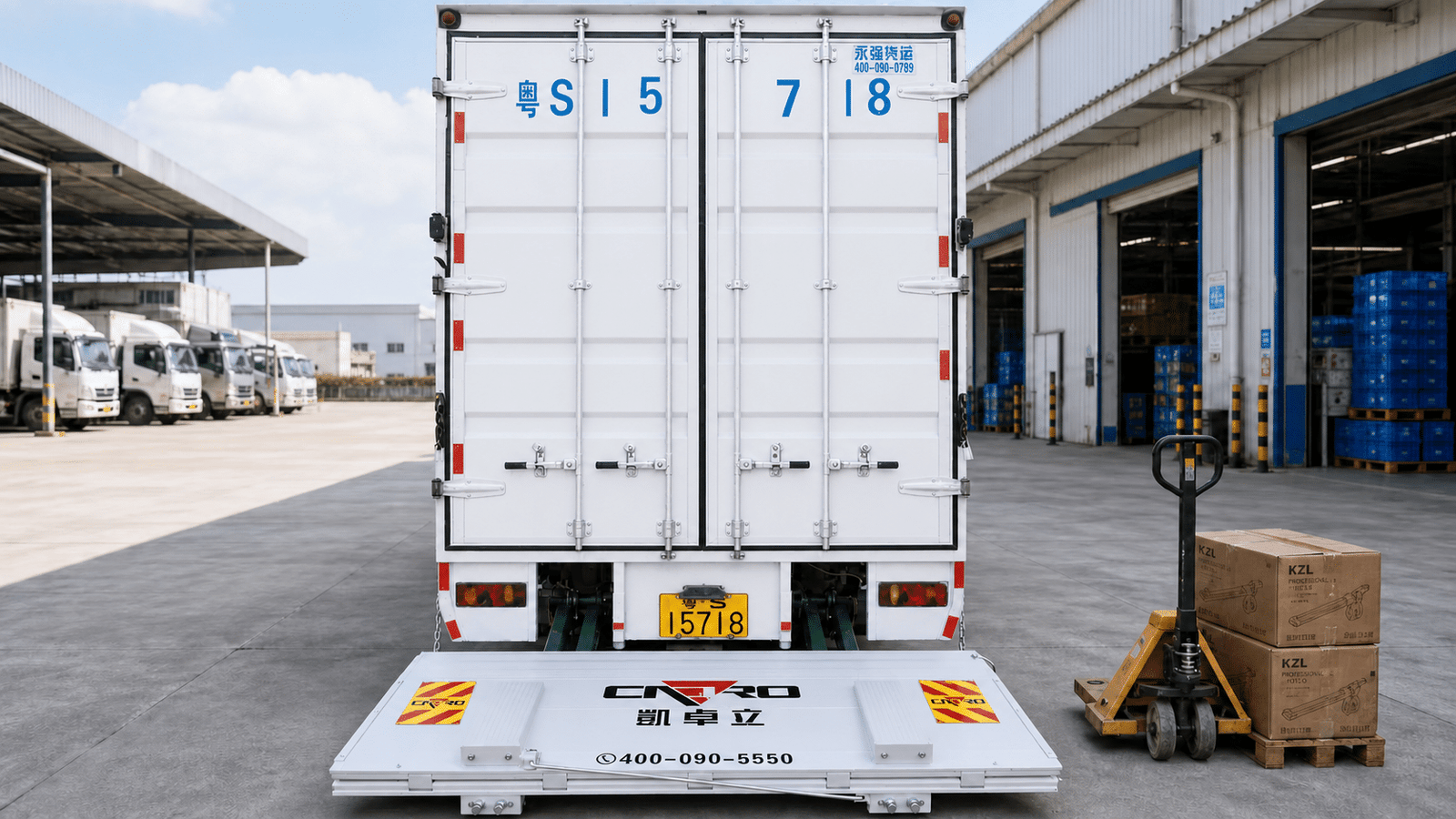
Public Dhollandia product language keeps reinforcing a useful point for Cadro: rear-opening clearance is part of the specification. If the vehicle alternates between dock loading and ground unloading, fold-away storage is not a side detail. It is part of workflow design.
That gives Cadro a cleaner SEO and sales angle than a generic product-spec page. The independent-site article can help buyers think through route logic before they ask for a quote.
Serviceability belongs in the RFQ conversation
Public Palfinger material links maintenance, spare parts, training, and reliable day-to-day operation in one narrative. That reflects how fleet buyers really think. A tail lift that is difficult to inspect or awkward to service becomes a route problem, not just a workshop problem.
For city-delivery fleets, the RFQ should include maintenance access, hydraulic layout clarity, reinforced load points, and predictable service scheduling. Cadro's natural fit here is practical rather than abstract: compact folding design, stable hydraulic lifting, guided movement, reinforced load-bearing points, welded structure integrity, precision assembly, and maintenance-friendly design.
A better RFQ checklist for urban distribution and courier fleets
- Is the route mainly street delivery, dock delivery, or mixed?
- Are roll cages, parcel carts, or pallet jacks common?
- Does payload efficiency justify a lightweight platform strategy?
- Must the lift store fully out of the way for rear-door or dock access?
- Is level ride important for repeated daily loading cycles?
- How important is quick maintenance turnaround for fleet uptime?
- Is the truck a dedicated fleet asset, an upfit project, or part of a rental / mixed-use pool?
Where Cadro fits
Cadro does not need to compete on public parameter pages alone. A stronger position is to help the buyer choose around route logic: payload use, rear access, platform stability, and maintenance access. That is more differentiated, more useful, and better aligned with buyer intent for independent-site SEO.
Conclusion
The right lightweight level-ride tail lift for urban distribution and courier fleets is the one that protects route speed, supports stable cart handling, preserves rear access when needed, and stays practical to maintain. That is why this topic fits Cadro today: it reflects real fleet-buying logic and gives the brand a clearer content position than another generic spec-driven article.