Cadro Industry Insight · May 2026
Tail Lift Safety Training: How Fleet Operators Can Cut Damage Claims and Protect Teams in 2026
A complete guide to structured operator training that cuts cargo damage by up to 50%, lowers insurance premiums, and extends tail lift service life.
47%
Avg. Claims Reduction
$3.2B
Market Size by 2032
50%
Max Claims Payout Cut
400%+
Training ROI
When a fleet operator realizes tail-lift cargo damage cost $47,000 last quarter — and better training could have avoided nearly 70% of those claims — the math hits hard. Consequently, safety training has quickly moved past the "nice-to-have" checkbox. For example, it now stands alone as the most cost-effective lever for reducing claims. In addition, it protects drivers and extends equipment life — all at once.
ReAnIn's latest market report (May 2026) projects the global tail lift market will reach $3.2 billion by 2032. Specifically, it forecasts a CAGR of 12.4%. Meanwhile, as more trucks hit the road with hydraulic tail lifts, the operator pool expands rapidly. As a result, the safety risk grows fast when training fails to keep pace. In the same period, voices like LiftGateMe have started publishing systematic safety guides. Notably, this signals a clear industry shift: from "trust the driver" toward structured, continuous operator education.
In short, for fleet managers, the real question has changed. It is not whether to invest in tail lift safety training. The real question is how to structure it. Specifically, the program must actually reduce claims. It must protect people. Finally, it must pay for itself within months.
Why Tail Lift Safety Training Deserves Urgent Attention in 2026
Three converging forces have turned 2026 into a turning point for tail lift safety. Specifically, the economic case, the regulatory environment, and the technology landscape all push in the same direction.
💡 Industry Signal: Leading brands now shift from "sell the hardware, leave the rest" toward a full "product + training + maintenance" ecosystem. For instance, Maxon's recent safety guide series confirms this trend. Notably, their guides cover BMR column lift protocols, GPTWR load best practices, and preventive maintenance checklists (published April–May 2026). This confirms that safety education now functions as a core competitive differentiator — not just an after-sales service.
The Economic Case Is Now Crystal Clear
RPM North America recently reported a striking finding. Fleets that adopt symmetric photo condition reporting — consistent before-and-after images — can cut net claims payouts by up to 50%. Dispute resolution time drops from six weeks to just 24 hours. However, photo protocols only work when operators know how to execute them. That training starts with one thing: a thorough understanding of safe tail lift operation across every load condition.
Regulatory Pressure Tightens Worldwide
Regulatory pressure is tightening worldwide at a rapid pace. For example, European markets increasingly demand documented operator competency. Operators must prove they can use a truck liftgate safely in commercial service. Meanwhile, in the United States, DOT enforcement weeks keep freight rates high. Consequently, fleet owners push to maximize asset utilization. In short, every hour of downtime from a preventable accident now slices directly into already-thin margins.
Technology Evolves Faster Than Operator Knowledge
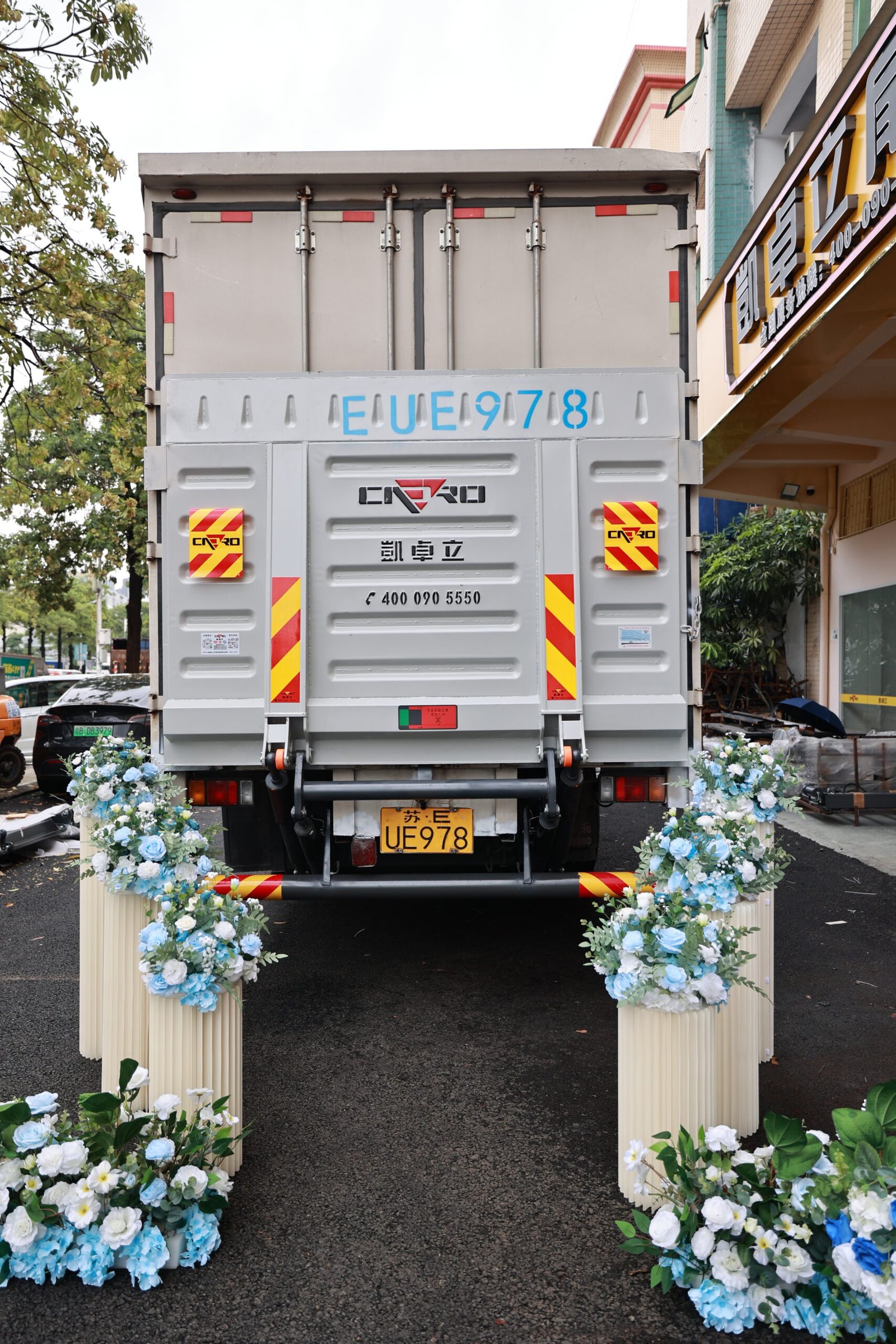
Modern hydraulic tail lifts from manufacturers like Cadro now feature built-in safety systems. These include automatic platform locking, overload protection sensors, anti-slip surface treatments, and emergency manual overrides. However, even the best safety features only work when operators understand them. A sensor that beeps for an overloaded platform saves no one if the driver simply ignores it.
Trained vs. Untrained Operators: What the Data Shows
The gap between a trained and untrained operator is real and measurable. It shows up clearly across three dimensions: claims data, equipment lifespan, and driver turnover.
⚠️ Untrained Operator
- Cargo damage claims: $12K–$18K per vehicle/year
- Service calls: 6–9 per year
- Injury incidents: 3.8 per 100K cycles
- Platform surface life: 18 months
- Dispute resolution: 6–8 weeks
- Driver retention: Below average
✅ Trained Operator
- Cargo damage claims: $3K–$6K per vehicle/year
- Service calls: 2–3 per year
- Injury incidents: 0.7 per 100K cycles
- Platform surface life: 36+ months
- Dispute resolution: 24–72 hours
- Driver retention: Above average
The data paints a clear picture. Specifically, a commercial vehicle liftgate is precision equipment that rewards skill and punishes carelessness. Furthermore, the RPM study found that fleets using structured loading protocols enjoy two bonus benefits. First, they see lower claims costs. Second, their insurance premiums drop as well. That is because underwriters increasingly factor operator training into their risk models.
In short, training costs hundreds per operator per year. Meanwhile, skipping training costs tens of thousands.
Where Tail Lift Safety Training Makes the Biggest Impact: Application Scenarios
Every fleet faces different safety risks. For example, the cargo type, delivery environment, and vehicle configuration all shape what "safe operation" means in practice. Therefore, training must adapt to each scenario.
Urban Last-Mile Delivery Fleets
High-stop-count routes create the most risk. Frequent curb-side loading leads to operator fatigue and rushed procedures. Consequently, training for this scenario must emphasize three things: pre-cycle visual checks, proper curb-gap assessment, and consistent safety rail use. Cadro builds its folding hydraulic tail lift models for compact urban trucks. These models feature a streamlined platform that takes less physical effort per cycle. As a result, operators face less temptation to skip safety steps when time runs short.
Cold Chain and Pharmaceutical Logistics
Temperature-sensitive cargo adds real complexity. Operators must work faster to protect cold chain integrity. At the same time, they handle loads worth tens of thousands per pallet. Therefore, cold chain training needs dedicated modules on two areas: load securing and temperature exposure timing. Cadro's premium hydraulic tail lifts feature smooth, jerk-free lifting. This helps prevent load shifting. In turn, it protects both product integrity and operator safety at every cycle.
Construction and Heavy Equipment Delivery
Construction materials and heavy machinery create naturally higher safety stakes. Operators need training on three specific skills: center-of-gravity placement, load-securing strap use at ground level, and capacity recognition before attempting a lift. Cadro's cantilever tail lifts feature higher structural reserves for exactly this reason. This engineering choice gives operators an extra safety margin for heavy-duty applications.
Waste Management and Municipal Services
Frequent stops, varied loads, and public exposure make municipal operations uniquely challenging. Beyond standard procedures, safety training here must cover three additional areas: pedestrian awareness protocols, proper nighttime lighting operation, and emergency stop procedures. Notably, Cadro offers configurable safety lighting packages. These integrate directly with the tail lift control system. As a result, operators never compromise on visibility — day or night.
🔍 Explore Cadro's Safety-Focused Product Range
Whether your fleet handles parcels, pallets, perishables, or heavy equipment — Cadro manufactures hydraulic tail lifts with operator safety as a core design principle.
Explore Cadro Tail Lift Products →How to Build a Tail Lift Safety Training Program: A Step-by-Step Guide
You do not need a full-time safety director to build an effective program. In fact, a structured approach with clear milestones can deliver measurable results within the first quarter. Here are the six steps:
Conduct a Tail Lift Risk Audit
First, document every actual risk your fleet faces. Walk through a typical delivery day and catalog every trouble point. Specifically, examine platform edge clearance, load weight estimation, weather conditions, nighttime lighting, and pedestrian proximity. Then create a simple risk matrix ranking each hazard. This audit becomes your training curriculum outline.
Establish Standard Operating Procedures (SOPs)
Next, turn those risk findings into clear visual SOPs. Keep each document to one page. Include photos of correct and incorrect practices. Key SOPs to create: pre-operation inspection checklist, safe load positioning guide, platform raise/lower sequence, emergency stop protocol, and end-of-shift securement. Make sure SOPs stay vehicle-specific. For instance, a Cadro folding tail lift handles differently than a cantilever unit on a larger truck.
Deliver Structured Onboarding Training
New operators need a minimum four-hour hands-on module. Cover equipment familiarization and safety feature demonstrations first. Then include overload protection, emergency stop, and manual override training. After that, conduct supervised practice: at least 20 complete cycles with different load types. Finally, require a written knowledge check. Document and digitally store all completion records for audit readiness.
Implement Pre- and Post-Trip Digital Checklists
Require operators to complete a digital pre-trip inspection before every first delivery. Require photo capture of platform condition, hydraulic connections, and safety rail integrity. Repeat the process at end of shift. These records serve three purposes. First, they build a predictive maintenance log. Second, they provide solid evidence for damage claim disputes. Third, they reinforce safety as a daily habit.
Schedule Quarterly Refresher Training
Skills degrade over time. In fact, operator safety knowledge drops roughly 30% within six months without reinforcement. Therefore, schedule two-hour quarterly refreshers. Each session should cover: incident review, hands-on practice with one specific procedure, and updates on new features or regulations. Keep sessions short, practical, and recorded for compliance tracking.
Use Incident Data to Continuously Improve
Every near-miss or cargo damage event needs a root-cause analysis. Crucially, feed that analysis back into the training curriculum. For example, if three operators report the same platform edge clearance problem, that represents a training gap — not three isolated incidents. Therefore, create a dedicated module to address it.
Why Cadro: Safety Engineered Into Every Hydraulic Tail Lift
Cadro takes a fundamentally different approach to tail lift safety. Some brands treat safety features as optional add-ons. In contrast, Cadro embeds safety as a core engineering principle right from the design stage. Here is what that means in practice:
🔒 Integrated Safety Interlocks
Automatic platform locking at stowed position prevents accidental deployment. Meanwhile, real-time hydraulic pressure monitoring with overload cutoff protects both operator and equipment during every lift cycle.
🛡️ Anti-Slip Platform Surface
Cadro applies a proprietary surface treatment during manufacture. This treatment maintains grip in wet or oily conditions. Furthermore, it lasts the full service life — it is not a bolt-on accessory that wears out in months.
⚡ Emergency Manual Override
An accessible manual control safely lowers the platform without power — even if the hydraulic system fails. Notably, this feature has literally saved lives across Cadro's global installed base.
💡 Configurable Safety Lighting
Integrated LED packages illuminate the platform, control station, and rear hazard zone. These lights make low-light operation significantly safer. Cadro treats visibility as a standard consideration — never a premium upsell.
🌍 Global Compliance Ready
Cadro tail lifts meet CE certification for the European market. They also align with key international safety standards. As a result, fleet operators get a consistent safety baseline — regardless of vehicle registration region.
Proven Results: Fleet Safety in Practice
A mid-sized European logistics operator with 120 delivery vehicles adopted a structured tail lift safety program in early 2025. Moreover, the fleet switched to Cadro hydraulic tail lifts at the same time. The vehicles ranged from 3.5-ton vans to 12-ton rigid trucks. After 18 months, the results speak for themselves:
47%
Drop in Cargo Damage Claims
€94K → under €50K annually
86%
Fewer Operator Injuries
7 events → 1 minor incident
62%
Fewer Unscheduled Repair Calls
340 operating hours freed
11%
Insurance Premium Reduction
Underwriter-cited training program
These results did not demand a big budget. In fact, the total training investment — curriculum development, trainer time, and digital tools — came to less than €18,000 in year one. Consequently, the return on investment exceeded 400% from claims reduction alone.
Frequently Asked Questions About Tail Lift Safety Training
Here are the most common questions fleet operators ask when building a tail lift safety training program:
How long does it take to train a new tail lift operator?
A proper initial training program takes a minimum of four hours. It combines classroom familiarization with at least 20 supervised hands-on cycles. Operators who handle specialized cargo — hazardous materials, high-value pharmaceuticals, or oversized construction components — need an additional two to four hours. That said, the key metric is not duration alone. The real goal is verified competency, proven through a practical assessment at the end of training.
What are the most common tail lift operator mistakes?
Operators most frequently make three critical errors. First, they skip the pre-operation visual inspection. This leads to using a tail lift with hidden damage or hydraulic leaks. Second, they exceed the rated load capacity. This often happens because operators estimate weight by eye. Third, they rush the platform raise/lower sequence without confirming load stability and area clearance. However, the good news is that each of these errors is preventable. A combination of training and digital checklists can eliminate them entirely.
Does tail lift safety training actually reduce insurance costs?
Yes — and the savings are significant. Insurance underwriters now actively request proof of operator training during renewals. Fleets that show documented, recurring training programs often qualify for premium discounts of 5% to 15%. The exact discount depends on the insurer and the fleet's claims history. Furthermore, the RPM North America study confirms that proper photo documentation protocols — a training-dependent behavior — can cut net claims payouts by up to 50%.
Can Cadro provide operator training materials?
Absolutely. Cadro supplies comprehensive operator manuals and visual SOP templates with every tail lift purchase. Fleet customers also receive pre-operation inspection checklists. For larger fleets, Cadro offers on-site train-the-trainer programs. These programs equip your fleet safety leads to deliver ongoing internal training. Reach out to Cadro's support team to discuss customization for your specific fleet setup.
How often should tail lift safety training be refreshed?
Cadro recommends quarterly refresher sessions of roughly two hours for all active operators. At a minimum, every operator should complete an annual competency reassessment. This should include both a written test and a practical skills demonstration. Additionally, operators returning from leave longer than four weeks need a condensed re-familiarization session. They should complete this refresher before resuming independent tail lift work.
Protect Your Fleet. Start With Safety Training That Pays for Itself.
Tail lift safety training is a profit protection strategy — not a cost center. In fact, it delivers measurable ROI through four channels: reduced damage claims, lower insurance premiums, fewer injuries, and longer equipment life. Meanwhile, the global tail lift market will reach $3.2 billion by 2032. The fleets that invest in operator competence today will run at the lowest total cost of ownership tomorrow.
Cadro builds every hydraulic tail lift with operator safety as a design requirement. From integrated safety interlocks and anti-slip platforms to CE-certified compliance and configurable safety lighting, every Cadro loading platform supports — and rewards — a well-trained operator.
Get a Tail Lift Consultation →Contact Cadro today to discuss requirements, request training materials, or schedule a product demonstration.