Hydraulic Tail Lift Buyer Guide
Remote-Control Tail Lift Operation: What Buyers Should Check Before Choosing a Hydraulic Tail Lift
Remote-control operation can make loading safer and easier. Yet the lift still needs stable structure, smooth motion, suitable capacity, and practical maintenance access. Buyers who check these fundamentals first avoid costly downstream surprises.
Key Insight: A remote control can improve operator positioning. Nevertheless, it cannot compensate for weak platform rigidity or unreliable hydraulic circuitry. Industry data consistently demonstrates that the duty cycle and load-bearing capacity of the lift correlate more strongly with long-term safety outcomes than the control interface alone.
Why Remote-Control Operation Matters for Logistics Fleets
For many delivery fleets, a hydraulic tail lift serves as more than a lifting platform. It forms part of the daily loading process, the driver's working routine, and the customer-site safety plan. Consequently, buyers who evaluate remote-control operation alongside structural fundamentals make stronger purchasing decisions.
A pendant or wireless remote control helps the operator stand where the platform, cargo, and surrounding area remain clearly visible. This proves especially useful when you handle pallets, roll containers, refrigerated goods, machinery, or commercial supplies. In addition, remote operation can reduce unnecessary walking between the vehicle and the fixed control point. It can also make repeated loading tasks less tiring during busy multi-stop routes.
However, fleet managers should never treat remote control as the only selection criterion. A dependable commercial vehicle liftgate still relies on fundamentals: correct capacity, reliable hydraulic movement, platform rigidity, load distribution, clear operating logic, and maintenance-friendly design. If these basics fall short, adding remote control will not resolve the buyer's real operational risk.
1. Operator Visibility: The Foundation of Remote-Controlled Safety
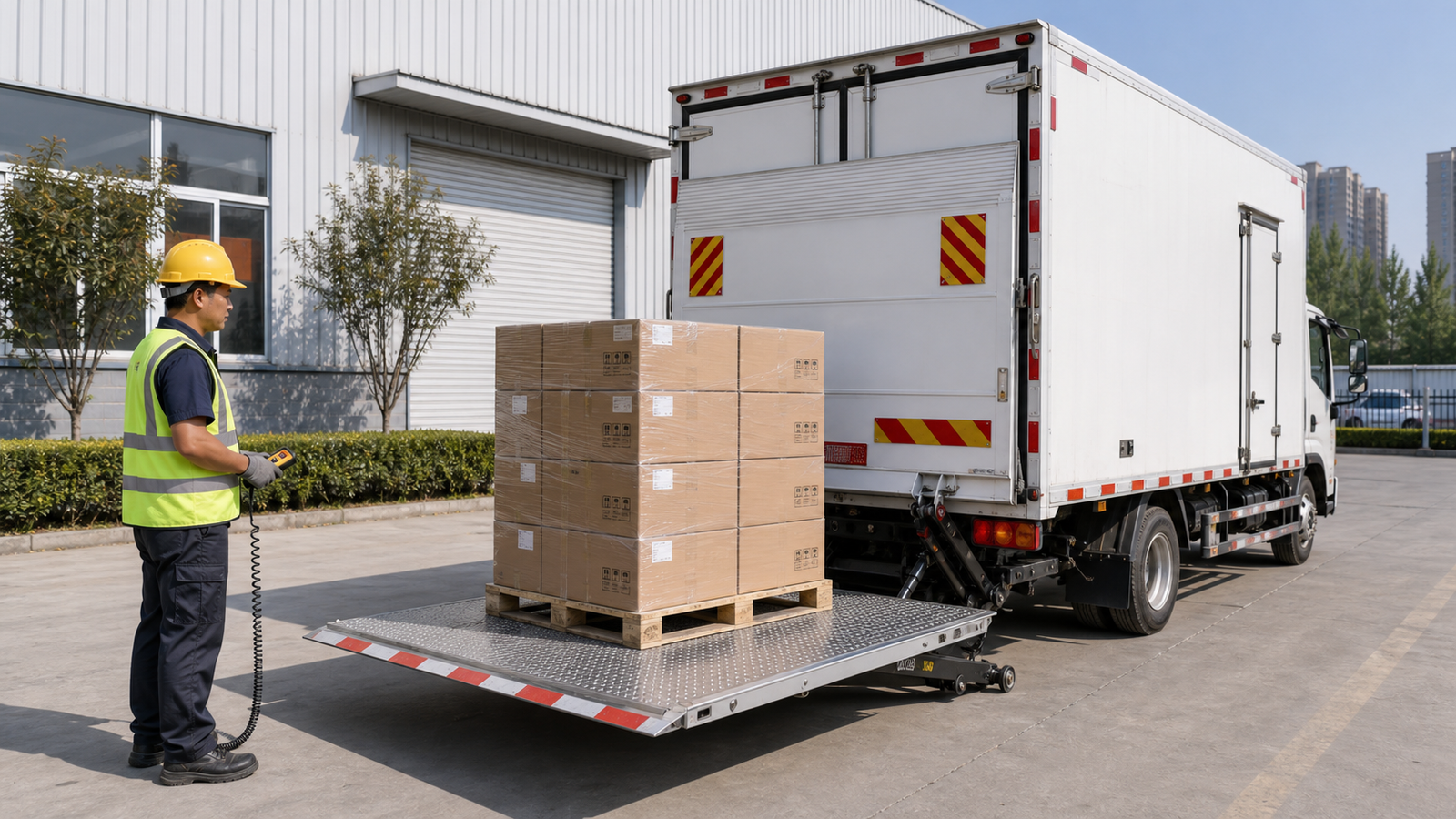
Visibility drives every safe loading decision. Fleet buyers should validate that the operator can see the platform edge, load position, pedestrians, uneven ground, and vehicle surroundings from the remote operating position.
Why Blind Spots Still Persist Even With Remote Controls
Remote controls free the operator from a fixed station. Yet they do not automatically eliminate blind spots. For example, a driver may stand at a safe distance but still lack a clear view of the far platform corner or approaching pedestrians. Therefore, fleet buyers should assess the combined field of view that the lift design and remote position together provide.
A remote-control setup demonstrates its greatest value when it helps the operator avoid blind spots and stay clear of pinch points. In other words, the lift should support easy operation without forcing the driver into an awkward or unsafe position. Fleet managers who prioritize this visibility factor substantiate a safer daily workflow for their entire team.
2. Platform Stability and Smooth Hydraulic Motion
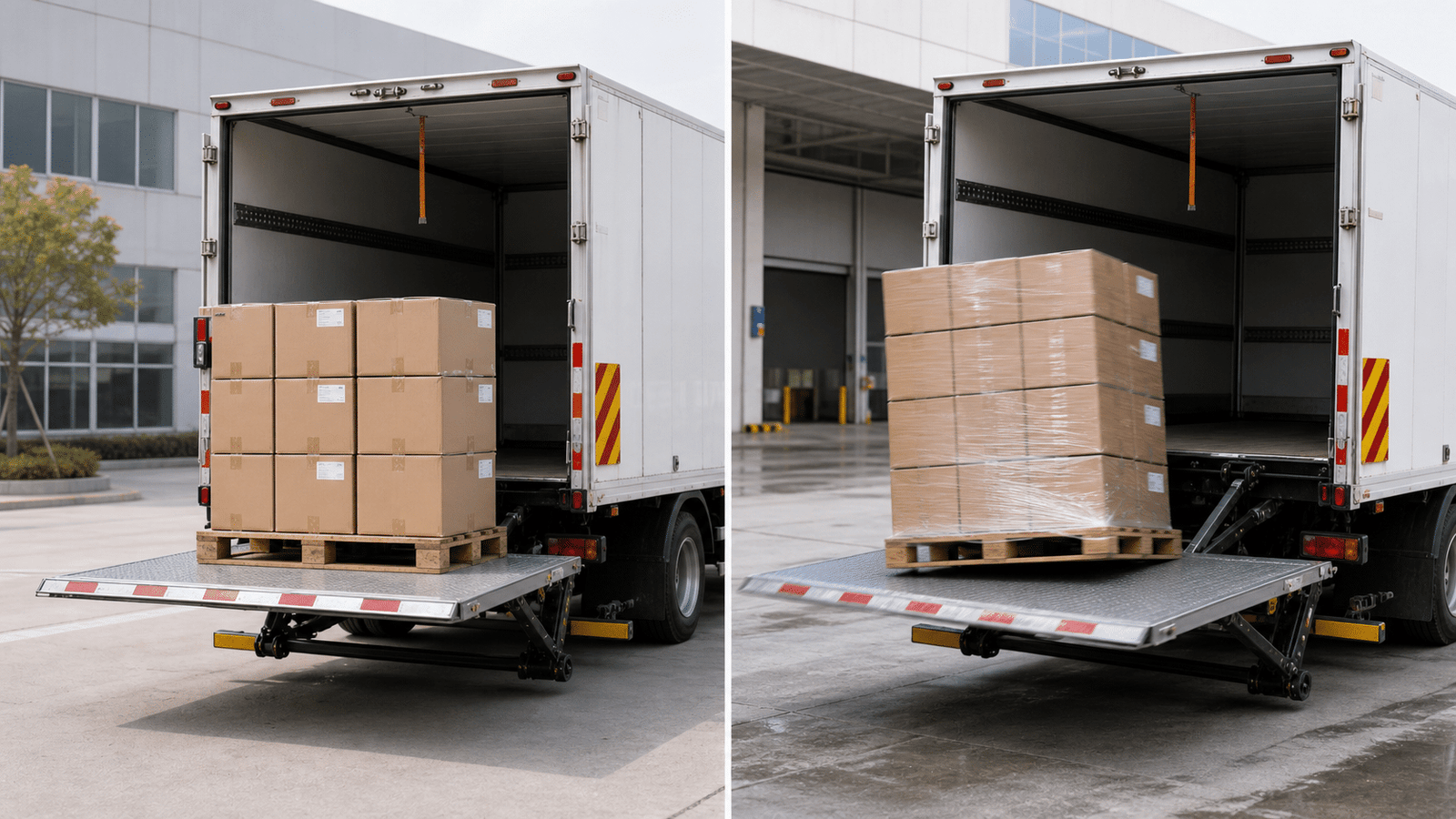
During loading and unloading, goods should move smoothly from ground level to the vehicle bed. Jerky lifting, platform flex, weak pivot points, or poor alignment can increase stress on both cargo and the operator.
How Asymmetric Loading Compounds Platform Stress Over Time
Fleet operators often place cargo unevenly across the platform surface. This asymmetric loading can compound stress on one side of the hydraulic circuitry and pivot assemblies. As a result, even a lift with sufficient rated capacity may develop premature wear in critical components. Over the long term, this pattern shortens the effective MTBF of the entire lift system.
A folding hydraulic tail lift with guided motion and reinforced load-bearing points supports smoother movement. Furthermore, it delivers more predictable operation across the full duty cycle. Buyers who check for anti-jerk hydraulics and rigid platform construction mitigate the risk of cargo shift during remote-controlled lifts.
3. Real Cargo Profile vs. Rated Capacity: Match the Numbers to the Work
Buyers often fixate on the maximum lifting number on the specification sheet. However, the better question examines whether the rated capacity matches the real cargo profile that the fleet handles every day.
Why Oversizing or Undersizing Creates Hidden Costs
A 500 kg urban delivery vehicle, a 1,000 kg refrigerated truck, and a heavier industrial truck each require different platform sizes, hydraulic cylinder strength, and structural reinforcement. Oversizing adds unnecessary cost and vehicle weight. Meanwhile, undersizing increases wear and compounds safety risk. Consequently, fleet buyers should validate the actual load profile before locking in a capacity specification.
Matching capacity to real cargo also affects the duty cycle rating. Frequent stop-and-go deliveries demand more from the hydraulic circuitry than occasional bulk loading. Buyers who account for this operational pattern choose lifts that last longer under real-world conditions.
✅ Choose This Approach
- Confirm platform rigidity with guided motion rails
- Match rated capacity to real daily cargo weight
- Verify emergency stop access from the remote position
- Inspect hydraulic circuitry access for routine service
- Test anti-slip surface condition in wet environments
❌ Avoid This Approach
- Buying only on maximum lifting-number claims
- Ignoring platform flex under asymmetric loading
- Overlooking maintenance access in compact installations
- Skipping real-load testing before bulk orders
- Assuming remote control fixes all safety gaps
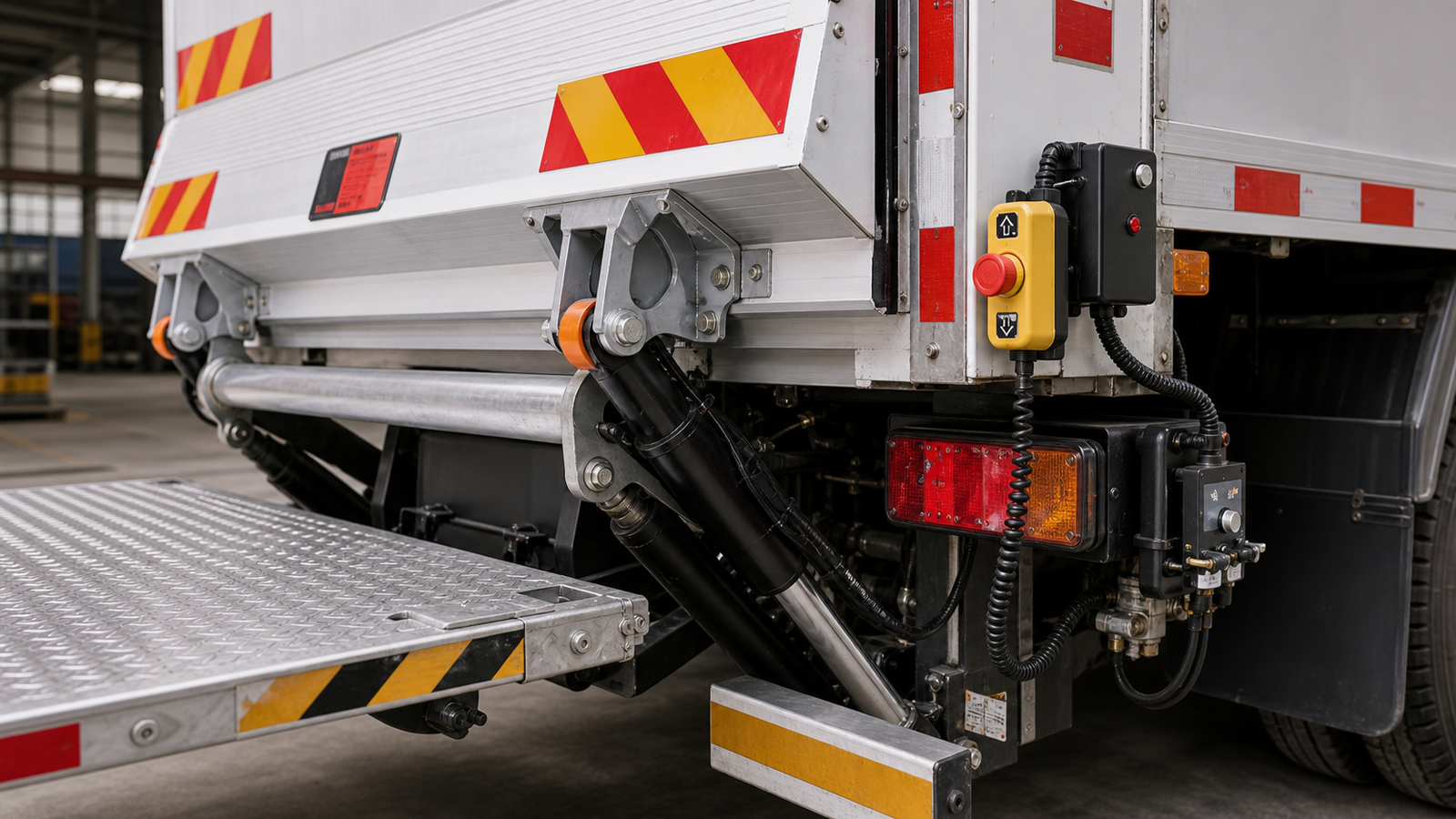
4. Control Logic and Embedded Safety Functions
A practical truck liftgate should offer clear raise, lower, tilt, and stop functions that respond predictably to the remote interface. Buyers should assess these control features as essential safety investments, not decorative add-ons.
Emergency Stop, Overload Protection, and Operator Confidence
Emergency stop access enables immediate response when the operator detects an unsafe condition. Similarly, overload protection prevents hydraulic damage when cargo exceeds the rated threshold. In addition, anti-slip platform surfaces, mechanical safety locks, and visual warning indicators help operators react quickly. All of these features work together to reduce avoidable mistakes during daily multi-stop work.
Buyers should validate that each safety function operates correctly with the remote control system. For instance, an emergency stop activated from the pendant must override all lift motion instantly. Fleet managers who verify this integration demonstrate a commitment to operator safety that goes beyond the specification sheet.
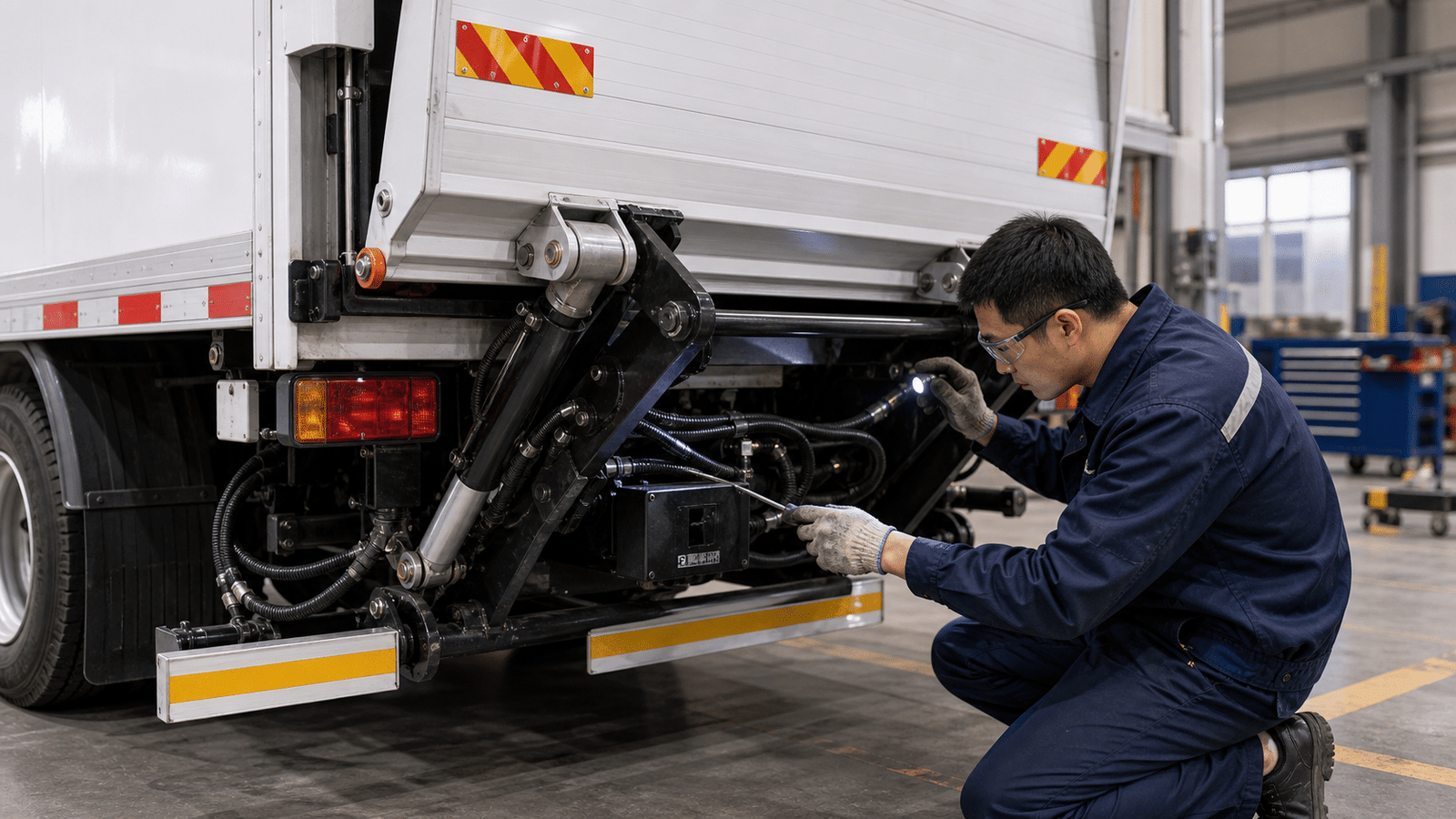
5. Maintenance Access: The Uptime Factor That Compounds Over Fleet Life
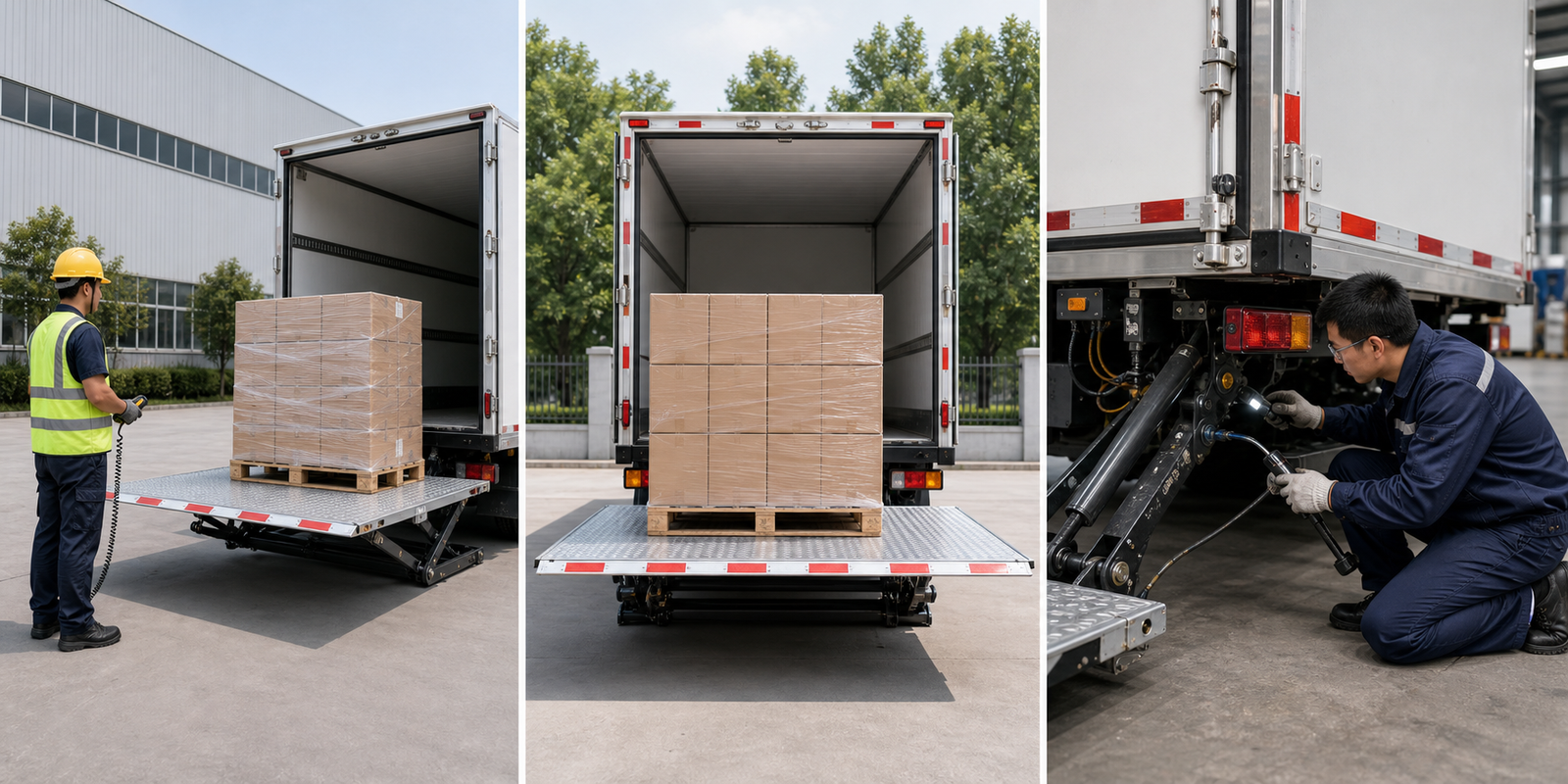
Buyers should examine how easily technicians can inspect hydraulic lines, pivot assemblies, electrical controls, platform surfaces, and welded structure. A lift that resists routine inspection may become expensive over its service life.
How Cadro Simplifies Routine Inspection for Fleet Operators
Cadro tail lifts feature accessible hydraulic circuitry layouts and clearly positioned inspection points. Technicians can reach pivot assemblies, cylinder mounts, and electrical junction boxes without dismantling surrounding vehicle components. As a result, fleet operators cut service downtime and keep more vehicles on the road. This matters especially for fleets running multiple trucks across wet, dusty, or high-frequency delivery conditions.
Long-term maintenance cost often correlates more closely with design accessibility than with initial purchase price. Therefore, international buyers who prioritize service-friendly lift architecture achieve lower total cost of ownership across the full equipment lifecycle.
Practical Buyer Checklist: 7 Steps Before You Choose
Use this step-by-step checklist to validate any hydraulic tail lift against real operational requirements. Each step addresses a factor that directly impacts daily safety and long-term reliability.
Does the operator have a clear view of the full platform and cargo from the remote position?
Does the rated capacity match the real daily cargo weight, not only the ideal scenario?
Does the platform move smoothly with guided motion and no unstable shaking?
Are emergency stop, overload protection, and anti-slip surfaces included and verified?
Can technicians easily reach hydraulic lines, pivots, and electrical components for inspection?
Does the folding or compact structure suit the vehicle layout without blocking access points?
Does the supplier provide long-term parts availability, technical guidance, and project support?
6. Why International Buyers Choose Cadro for Remote-Ready Tail Lifts
A hydraulic tail lift earns its value through daily performance, not just a rated lifting number. Cadro tail lifts deliver compact installation, folding design, smooth lifting, stable operation, reinforced structure, and accessible maintenance points. These attributes matter to distributors, OEM project managers, fleet operators, and end buyers because they connect directly with uptime and safer handling.
From Cantilever to Folding: Cadro Delivers the Right Configuration
Cadro offers cantilever, folding, and column tail lift configurations. Each series supports customization for vehicle type, cargo profile, and duty cycle requirements. Buyers can specify platform dimensions, hydraulic cylinder ratings, and control interface preferences. In turn, Cadro validates every specification against real-world load-bearing demands before delivery.
Cadro also provides OEM and ODM services for international partners. The engineering team communicates directly with buyers to align on structural reinforcement, surface treatment, and compliance documentation. This collaborative approach helps fleet managers mitigate installation risks and reduce post-delivery rework.
7. Making the Smarter Buying Decision for Your Fleet
A well-selected hydraulic tail lift should make loading safer, quicker, and easier. It should never add unnecessary complexity to the daily routine. For international buyers, that balance often separates a platform that looks acceptable on paper from a truck liftgate that performs reliably in demanding logistics work.
Remote-control capability adds genuine value when buyers first validate the underlying lift quality. After all, the best remote interface cannot rescue a lift with unstable motion, poor load distribution, or inaccessible service points. Consequently, fleet decision-makers who invest time in the fundamental checklist—visibility, stability, capacity match, safety logic, maintenance access, and supplier support—position their operations for years of dependable performance.
Frequently Asked Questions About Remote-Control Tail Lift Operation
Buyers often raise these questions when evaluating remote-control functionality for hydraulic tail lifts. The answers below reflect real-world fleet experience and engineering best practices.
1. Does remote control make a tail lift automatically safer?
Remote control can improve operator positioning. However, it cannot replace platform stability, reliable hydraulic circuitry, or proper load distribution. A remote-controlled lift still needs solid structural engineering and embedded safety functions to perform safely during daily duty cycles.
2. What types of Cadro tail lifts support remote-control operation?
Cadro offers remote-control compatibility across its cantilever, folding, and column tail lift series. Buyers can specify pendant or wireless remote interfaces during the order configuration. Each installation undergoes pre-delivery testing to validate control logic and safety interlock functions.
3. Can I retrofit remote control to an existing Cadro tail lift?
Retrofit feasibility depends on the existing control architecture and hydraulic valve configuration. Cadro engineering teams evaluate each case individually. They verify compatibility before recommending a retrofit kit. Contact Cadro technical support with your lift model and serial number for a detailed assessment.
4. What safety functions should I verify with remote-controlled operation?
Buyers should confirm that the emergency stop function overrides all motion from the remote position. In addition, verify overload protection, anti-slip platform surfaces, mechanical safety locks, and visual warning indicators. Test each function during a live demonstration with representative cargo weight before final acceptance.
5. How does Cadro support international buyers after purchase?
Cadro provides parts supply, technical documentation, remote guidance, and project communication support for international buyers. The service team maintains direct communication channels for troubleshooting and parts ordering. Fleet operators across Europe, Southeast Asia, and the Middle East rely on this support network for ongoing equipment uptime.
Ready to Choose a Remote-Ready Tail Lift That Performs?
Browse Cadro's full range of hydraulic tail lifts or request specification support. Our engineering team helps fleet buyers match the right configuration to real cargo profiles, vehicle layouts, and safety requirements.
Source Notes
- Dhollandia SA: Where Can I Get a Tail Lift With Remote Control Operation? (dhollandiasa.com, June 2026)
- Heavy Duty Trucking: Rise Robotics Launches Beltdraulic All-Electric Liftgate (truckinginfo.com)
- AIHOT / McKinsey: Agents, Robots, and Us: How AI Reshapes Work and Skills in Europe (McKinsey Global Institute, 2026)