
Cadro Tail Lift Buyer Guide
Tail lift for refrigerated trucks
A practical specification guide for cold-chain fleet buyers balancing dock access, low-temperature hydraulic performance, platform design, maintenance, and long-term reliability.
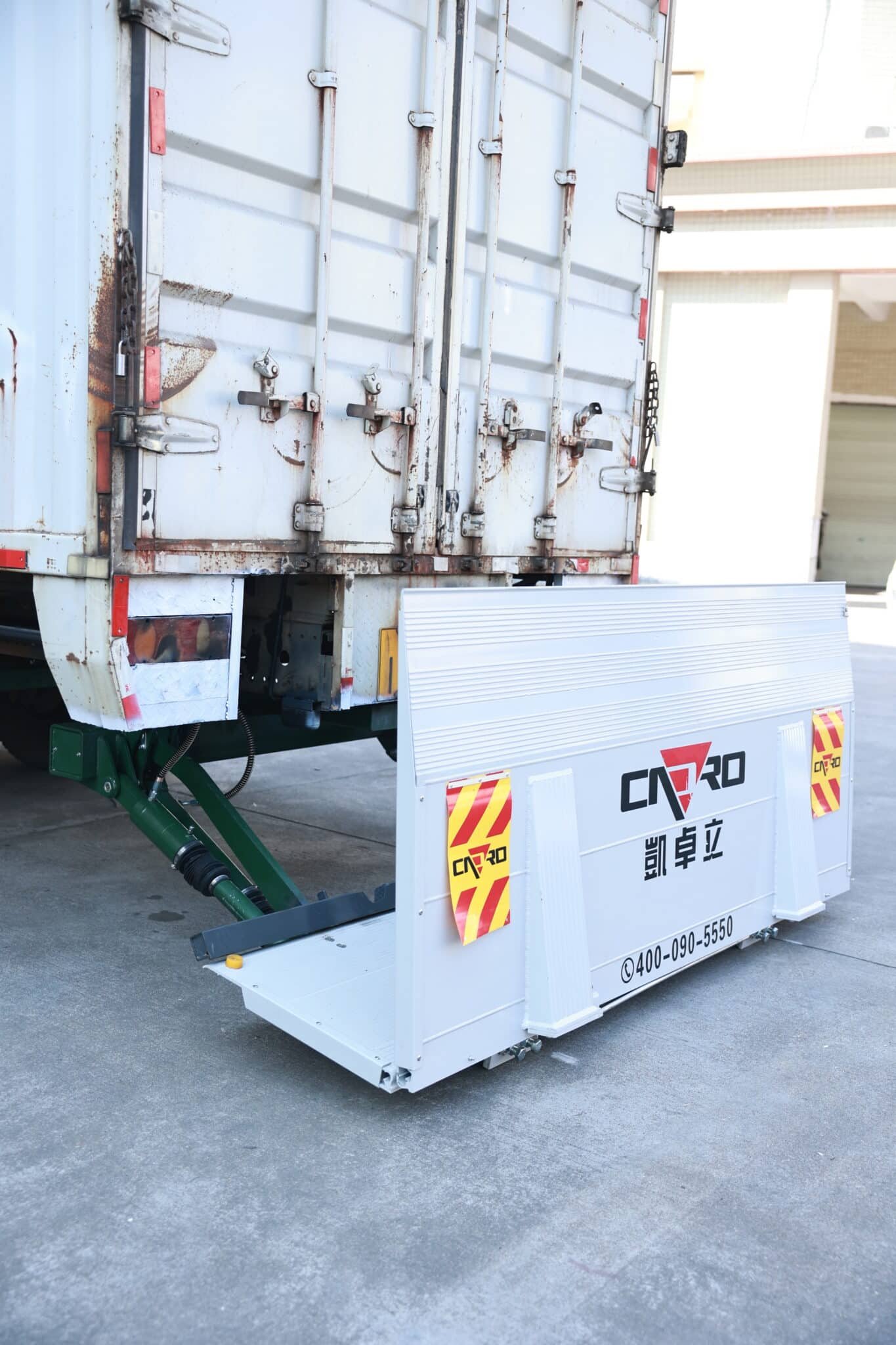
How Fleet Buyers Should Specify a Tail Lift for Refrigerated Trucks Without Losing Dock Access
Cold-chain fleets do not buy a tail lift for the same reason as a general delivery operator. A refrigerated truck may need to protect cargo temperature, load at street level, and reverse onto a dock later in the day.
Therefore, the tail lift becomes more than a lifting device. It affects uptime, loading flow, vehicle fit, and the way drivers keep a route on schedule.
Recent public materials point to the same buyer issue from different angles. For example, Beauway frames the decision around lift type, rated capacity, platform material, low-temperature hydraulic performance, and supplier support.
Meanwhile, Maxon's long-running TUK-A-WAY positioning still emphasizes dock-ready stowage. In addition, Great Dane and Idealease keep pushing maintenance and operating discipline. As a result, refrigerated fleets should specify a hydraulic tail lift around route reality, not just around headline capacity.
Start with the route, not the catalog
The first question is how the refrigerated truck actually works. A vehicle that mainly serves supermarket docks has different needs from one that stops at restaurants, pharmacies, convenience stores, and mixed delivery points.
For example, some fleets need a dock-ready rear end because they alternate between dock loading and ground-level unloading. However, other fleets need better urban maneuverability, compact storage, or lower self-weight to protect payload.
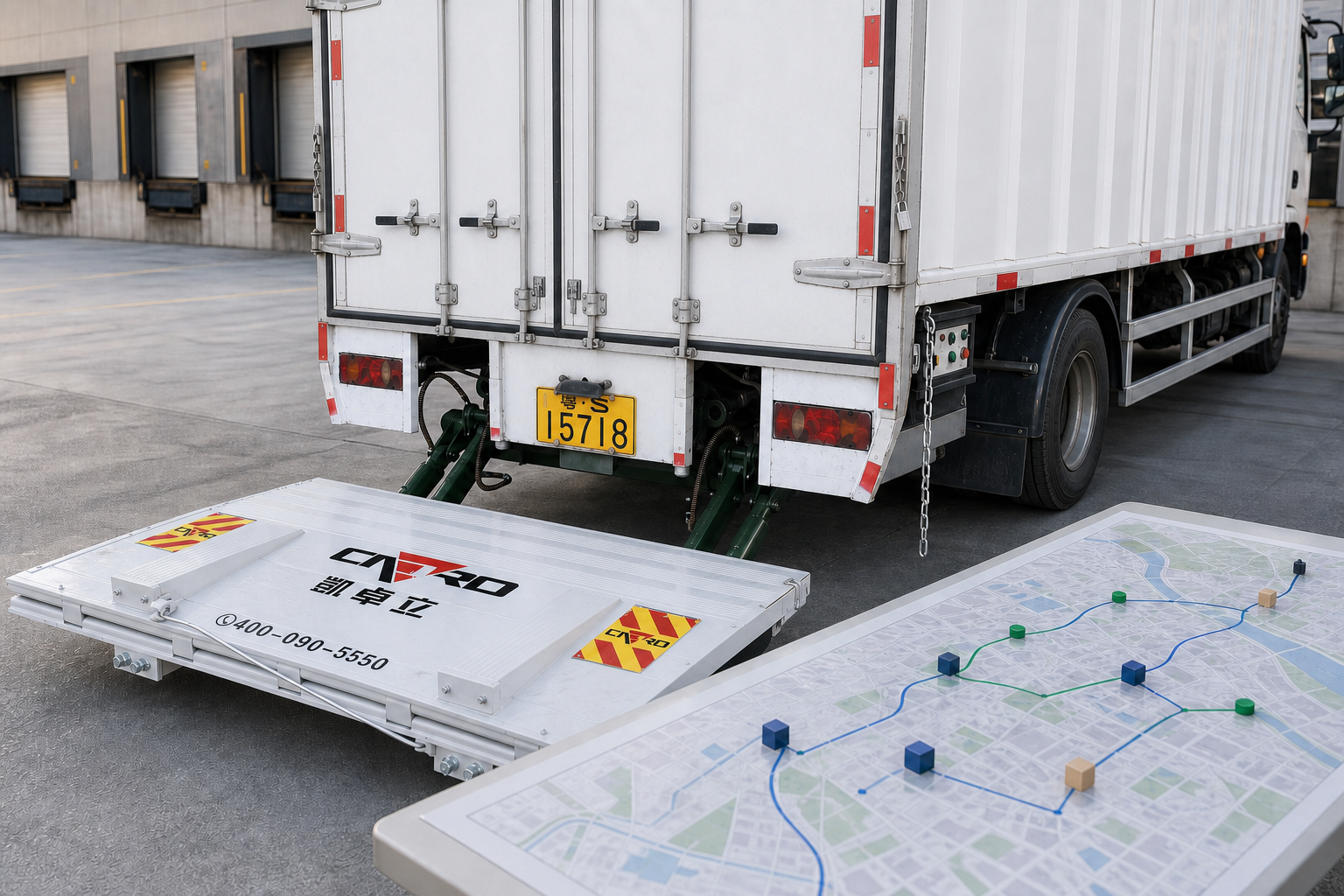
Before reviewing models, buyers should confirm:
- the heaviest regular load and its real center of gravity;
- the daily lift-cycle count;
- whether dock loading and street delivery happen on the same route;
- the floor height and rear-body geometry of the truck;
- the amount of rear clearance available during loading;
- the lowest ambient temperature the hydraulic system must handle.
That checklist prevents a common procurement error. Instead of choosing a tail lift that only looks right on paper, the buyer can check whether the lift will keep working once the truck enters real cold-chain service.
Configuration matters more in refrigerated transport
Cold-chain transport creates a stronger trade-off between lift structure and operating convenience. A cantilever or rail-style lift can offer strong platform stability for heavier or more repetitive loading.
At the same time, a folding hydraulic tail lift can help keep the rear profile compact. Also, a tuckaway or concealed configuration becomes especially attractive when the truck must remain dock compatible.
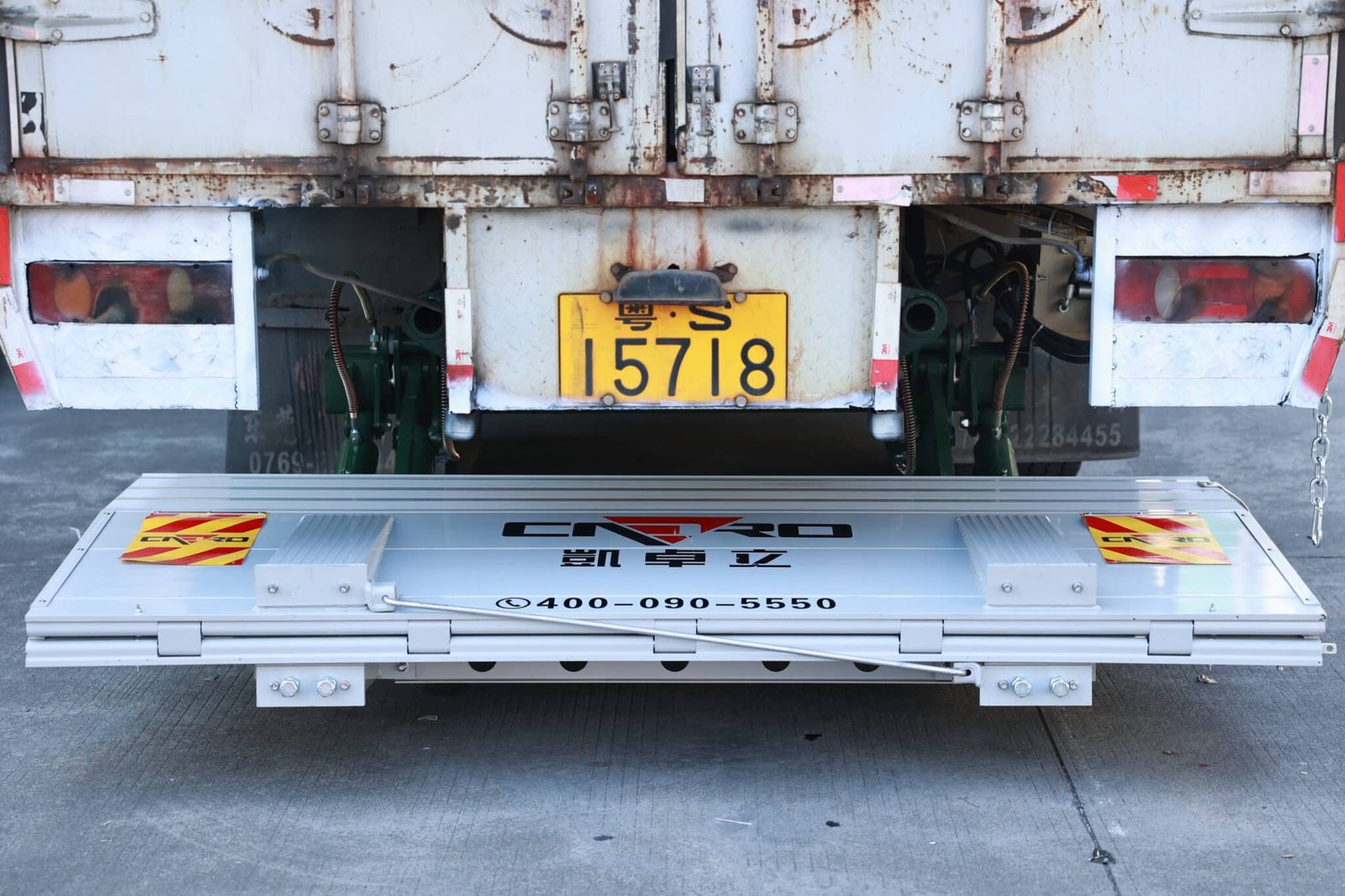
This is where buyer intent becomes more precise. If the fleet frequently backs onto a loading dock, the conversation should include how the platform stows, whether it stays clear of the dock interface, and how much manual repositioning the driver needs.
Therefore, a dock-ready design can protect route efficiency better than a cheaper lift that interrupts loading flow. For refrigerated fleets, the right choice is rarely "highest capacity wins."
Instead, the correct answer is the configuration that fits the route pattern, body layout, and loading interface with the least operational friction.
Low-temperature hydraulic behavior is not a detail
In refrigerated and cold-weather use, hydraulic behavior becomes a real specification issue. Public refrigerated-tail-lift guidance now calls out cold-weather hydraulic performance because fluid viscosity, control response, and cycle smoothness can all change in lower temperatures.
Because of that, buyers should ask what operating temperature range the system supports. They should also ask how the hydraulic system is protected and whether the lift is designed for repeated cold-start cycles.
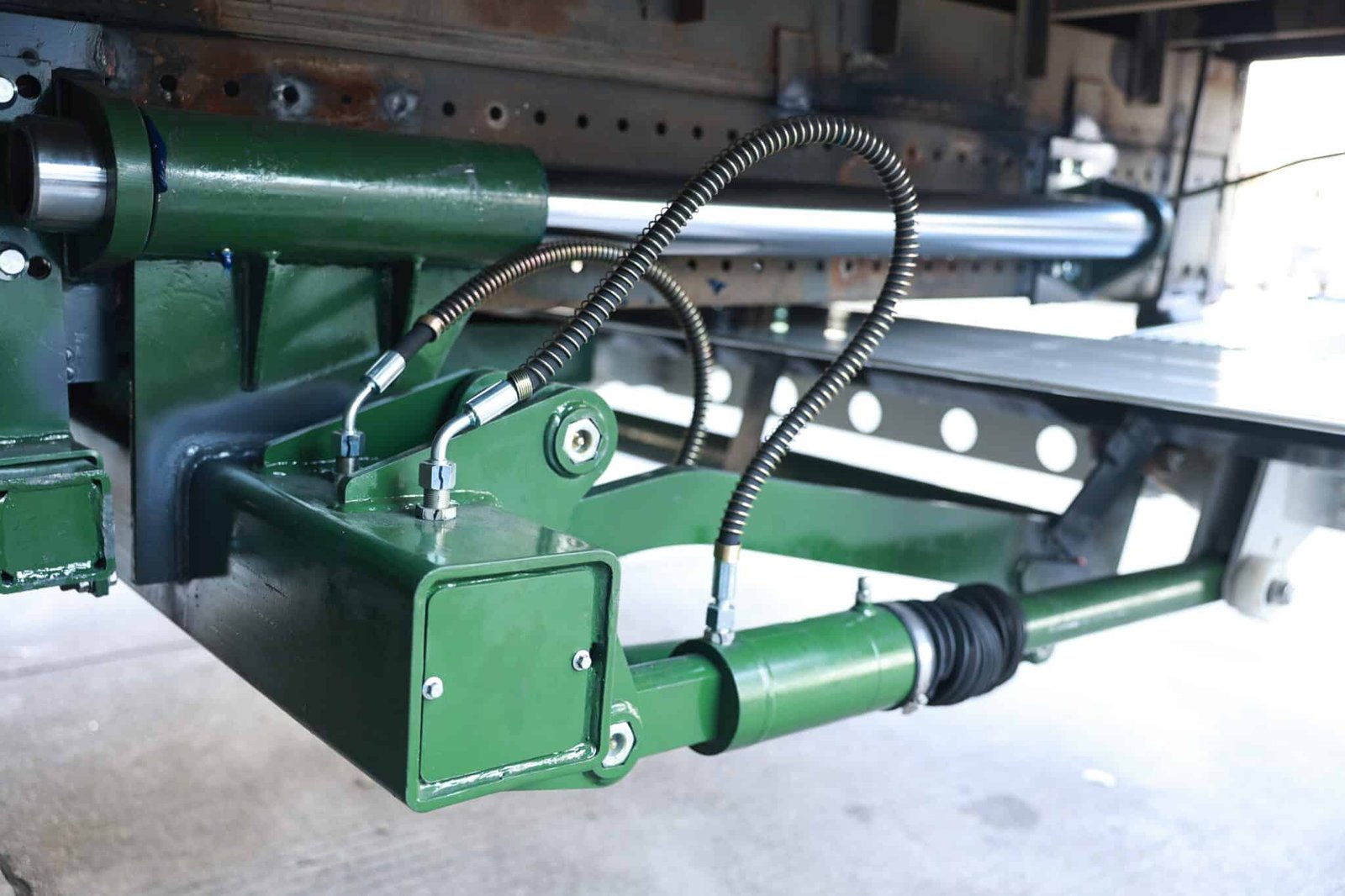
This is also where maintenance-friendly design matters. A tail lift that is easier to inspect, service, and troubleshoot can reduce downtime risk before a failure becomes expensive.
For example, hose routing, access to hydraulic components, reinforced load-bearing points, stable guided movement, and a clean welded structure all affect long-term serviceability.
Platform design should match both cargo and hygiene logic
Refrigerated transport does not move one cargo type. Some operators handle boxed food, while others move beverages, healthcare products, temperature-sensitive goods, or mixed pallets.
Therefore, platform material, anti-slip behavior, drainage logic, corrosion resistance, and cleaning practicality all influence long-term suitability. These details also affect how confidently drivers can load wheeled cargo during repeated stops.
Payload-sensitive urban fleets may care more about reducing self-weight. However, higher-cycle regional fleets may accept more weight in exchange for stronger structure.
In addition, buyers should review whether the platform remains stable on uneven ground. They should also check whether the loading geometry stays predictable during repeated curbside delivery.
Safety and documentation belong in the buying stage
Liftgate safety guidance from fleet service and trailer operators keeps returning to the same basics. Drivers need training, operators must respect load limits, and fleets should catch wear early through inspection.
Therefore, safety is not a separate after-sales issue. It is part of product selection and should be discussed before the RFQ is finalized.
A refrigerated truck liftgate usually works in fast-moving environments. As a result, delays can affect delivery timing, driver workload, and cargo control at the same time.
Before ordering, fleets should ask:
- How will drivers be trained for loading and stowage?
- What inspection points should be part of daily checks?
- What acceptance testing should be completed after installation?
- How will maintenance records be kept for each vehicle?
- How quickly can service parts and technical support be reached?
Where Cadro fits
Cadro should be positioned for this discussion in a practical way. The strongest message is not broad branding language, but the way the tail lift supports real refrigerated-truck work.
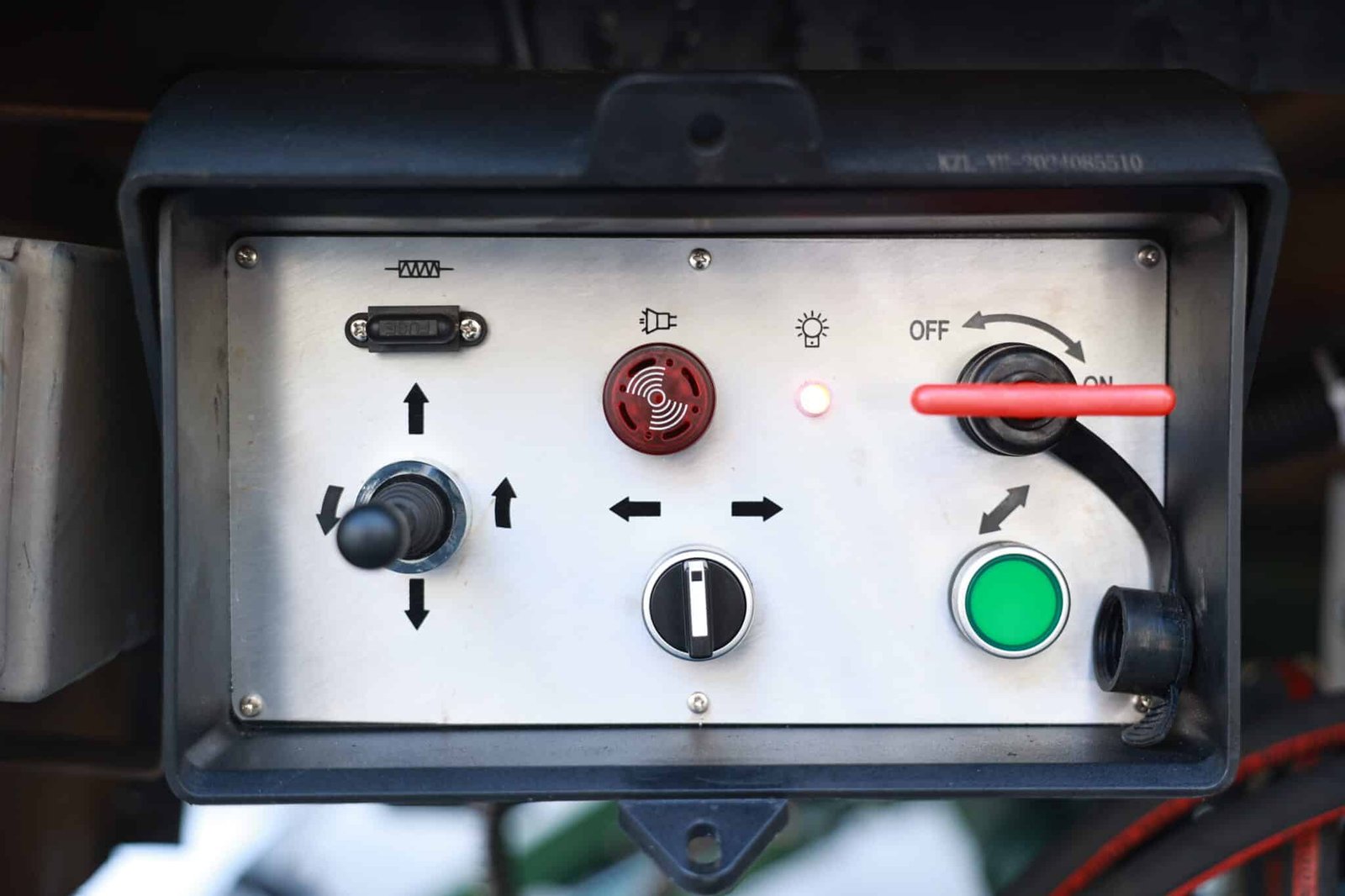
For example, Cadro can connect compact folding design, guided movement, stable hydraulic lifting, reinforced load-bearing points, welded structure, precision assembly, and maintenance-friendly logic to buyer value.
For buyers, those details connect directly to route reality. A hydraulic tail lift for refrigerated trucks should support smoother loading, safer unloading, reliable repeated cycles, and easier maintenance planning.
Therefore, Cadro's value is strongest when the conversation stays focused on fit, stability, serviceability, and application match.
Buyer checklist before RFQ
Before sending an RFQ, refrigerated fleet buyers should confirm:
- truck body type and rear-door arrangement;
- dock-loading frequency versus ground-loading frequency;
- heaviest normal payload and package handling method;
- required platform size and cargo stability needs;
- low-temperature operating range;
- preferred stowed position and rear-access requirements;
- acceptable lift self-weight;
- maintenance access expectations;
- inspection, acceptance-test, and service-document requirements;
- after-sales support response time.
Once these points are clear, the supplier can recommend a lift around the truck body, cargo type, loading environment, and service plan. As a result, the RFQ becomes easier to answer and easier to compare.
Conclusion
The best tail lift for refrigerated trucks protects loading flow without creating dock problems, cold-weather headaches, or maintenance blind spots. Therefore, buyers should choose around actual route conditions, stowage logic, low-temperature performance, and serviceability.
For Cadro, that creates a clear content opportunity. Instead of speaking only in hardware specifications, Cadro can speak to refrigerated-fleet buyers in the language of operating fit.
Source Links
- Beauway - Cold Chain Tail Lift for Refrigerated Trucks: Buyer's Guide
- Beauway - What Type of Tail Lift Is Best for Refrigerated Transport?
- Maxon Lift - TUK-A-WAY
- Great Dane - Best Practices for Liftgate Maintenance
- Idealease - Are your drivers operating their liftgate safely?
- Johnson Truck Body Maintenance Manual PDF
- Beauway - Tail Lift Installation Guide
Need a lift specification for a refrigerated truck body?
Prepare the route details, floor height, loading pattern, and cold-weather requirement before requesting a quote.