
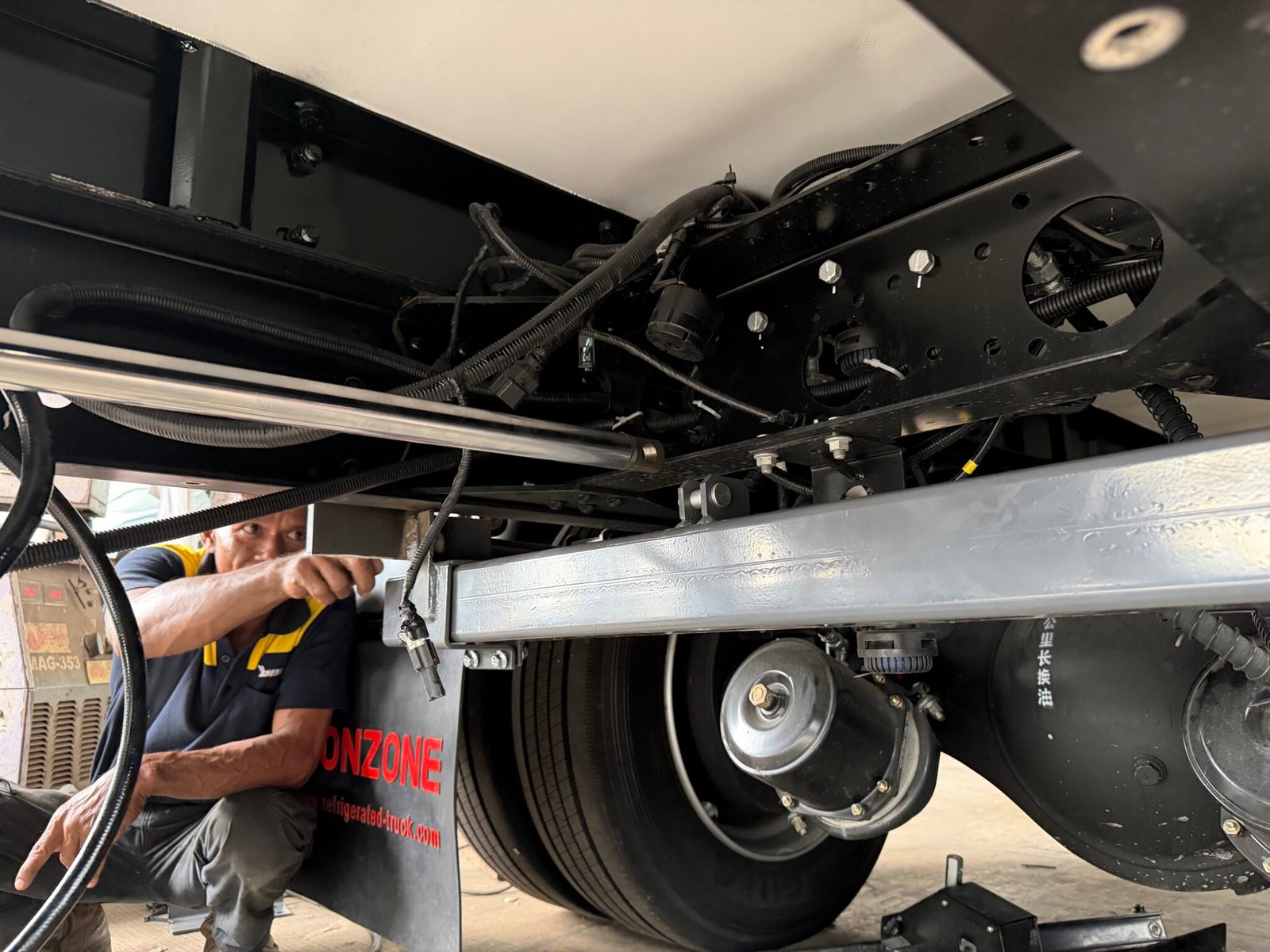
An anti-corrosion tail lift inspection helps you find rust before it becomes a costly repair. Also, it keeps the lift safe for daily loading work.
Moisture, road salt, mud, and chemicals can attack metal parts over time. However, a simple test routine can protect the platform, frame, hinges, hydraulics, and controls. Therefore, use this guide before busy seasons, after winter routes, or whenever the lift works in wet or coastal areas.
Why Anti-Corrosion Tail Lift Inspection Matters
Anti-corrosion parts are built to resist rust. Still, coatings can chip, bolts can loosen, and seals can wear. Therefore, regular checks are important.
First, a good inspection helps you spot small rust marks, weak paint, fluid leaks, and worn pins early. As a result, you can fix minor issues before they stop a vehicle. Also, operators can trust the lift more during daily loading.
If you need a model built for harsh routes, review CADRO’s anti-corrosion tail lift option.
Step-by-Step Anti-Corrosion Tail Lift Inspection
Check the Main Structure First
1. Start with a visual check. First, look at the platform, frame, hinges, arms, and mounting points. Then check for rust spots, peeling paint, cracks, dents, or missing bolts. Also, look for bubbling under the coating. As a result, you can find rust that is starting below the surface.
Test the Hydraulic System
2. Check hydraulic parts. Next, inspect hoses, fittings, cylinders, and the power pack. Look for leaks, wet marks, worn hoses, or loose connections. Then run the lift through a full cycle. Ideally, the movement should be smooth and steady.
Confirm Safety Controls
3. Test safety controls. After that, press the emergency stop. Check platform locks, warning lights, switches, and overload protection. In addition, make sure the lift stops and responds as expected.
Clean, Protect, and Record
4. Clean and protect the surface. Next, remove mud, salt, and chemical residue. After cleaning, dry the platform and joints. Then add touch-up coating where needed. Consequently, this anti-corrosion tail lift inspection step prevents many long-term problems.
5. Record each result. Finally, note the date, issue, repair, and next check. A short record makes fleet maintenance easier. For general workplace safety basics, see this OSHA material handling guide.
Build a Simple Maintenance Routine
Do not wait for rust to spread. Instead, use a regular anti-corrosion tail lift inspection to keep the lift cleaner, safer, and easier to service.
In short, check the surface, test the hydraulics, confirm the safety controls, and record the results. If your team finds leaks, deep rust, or slow movement, contact the CADRO service team for support.