
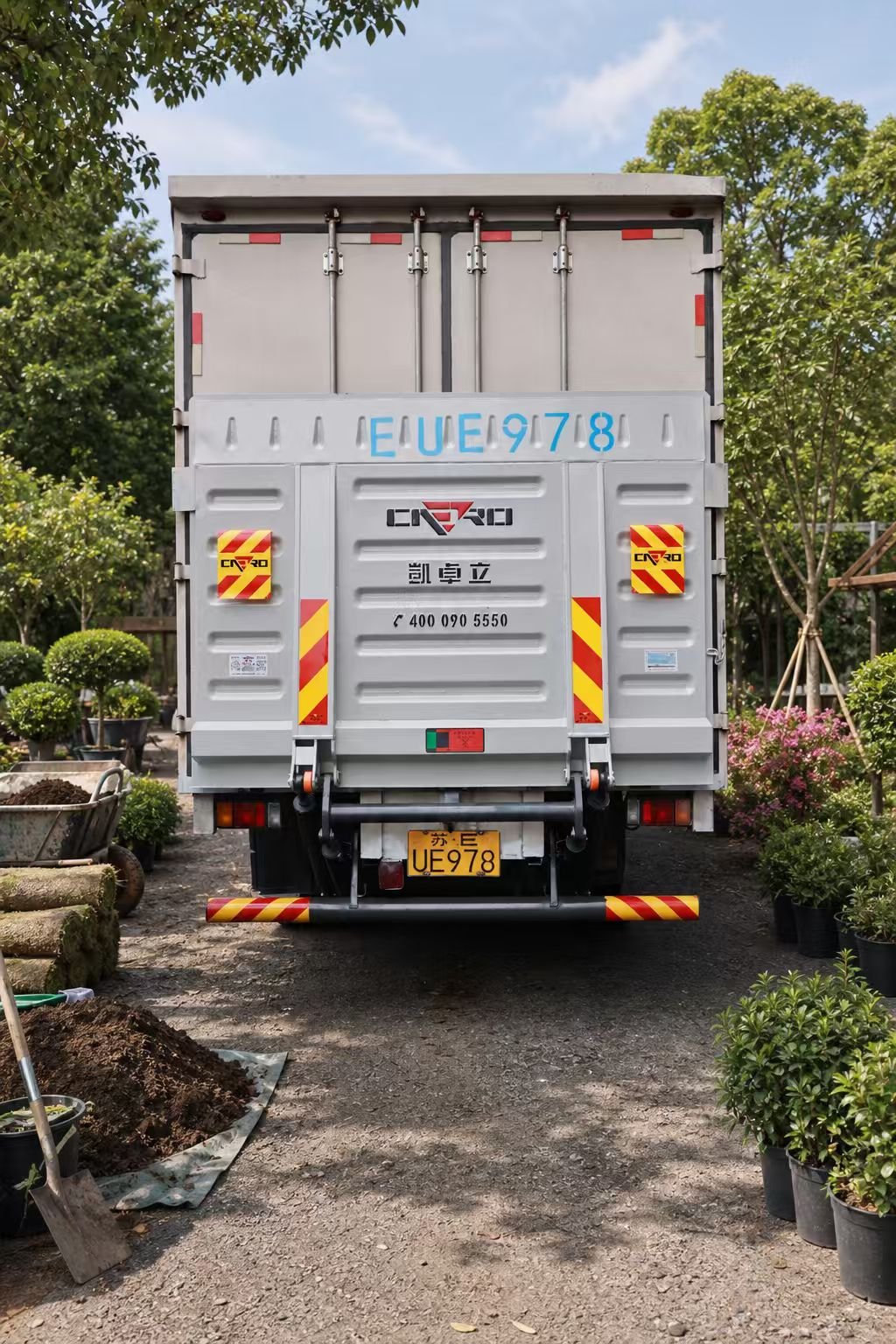
Channel sales field brief
How Tail Lift Distributors Should Qualify a Lightweight Tail Lift for Skilled-Trade and Landscaping Fleets
This article is written for tail lift distributors, regional dealers, body builders, and channel buyers who need a stronger customer-facing sales story for payload-sensitive skilled-trade and landscaping fleets.
- Primary keyword: lightweight tail lift
- Audience: distributors and resellers
- Use case: skilled-trade and landscaping fleets
A lightweight tail lift should be sold as a working-role decision, not as a generic truck accessory. Tail lift distributors usually win more trade and landscaping projects when they explain payload discipline, rear-package practicality, platform usability, and maintenance access before the quotation becomes a plain capacity comparison.
These buyers ask grounded questions. Can the platform help crews move bins, compact machines, irrigation parts, mowers, or mixed tools without making the rear package awkward? Does it preserve enough useful payload for daily work? Will inspection stay simple enough to protect uptime? A better article needs to make those answers visible in seconds, not hide them inside a specification block.
Most weak light-duty quotations fail for the same reason: they describe a product, but they never describe the daily job the vehicle must keep doing after installation.
Distributor sales problem this page should solve
Quick Answer for Distributors
Sell a lightweight tail lift when the account runs skilled-trade vehicles, landscaping support trucks, contractor fleets, or payload-sensitive service bodies that care about compact rear packaging, practical loading behavior, and low-disruption maintenance. Lead with the role of the vehicle, the way the load actually moves, and the support expectation after installation.
That framing gives the buyer a reason to compare on operating fit instead of discount alone. It also helps the distributor sound like a fleet advisor instead of a catalog seller.
- Payload disciplineKeep the truck useful after the lift is installed.
- Body fitCompact rear packaging matters on smaller working vehicles.
- Operator usabilityCrews prefer predictable daily loading over generic specification talk.
- Maintenance accessUptime matters when the same truck supports daily field work.
Why this topic deserves attention
Skilled-trade, landscaping, and contractor-support fleets buy differently from heavy freight operators. They often move mixed tools, bins, support parts, compact machines, and grounds-maintenance equipment. The loading event may be lighter than big cargo work, but the truck still has to stay practical every day. Therefore, body fit, payload discipline, and maintenance clarity influence the buying decision much more than a generic product grid suggests.
These buyers also dislike avoidable complexity. If the quotation cannot explain why a lighter setup is commercially useful, the account usually falls back to price comparison or delays the decision until someone defines the use case better.
- Operational pressure. One unavailable truck can delay a trade crew, a landscaping route, or a contractor schedule.
- Payload pressure. Useful payload is part of the job, not a side metric.
- Body-fit pressure. Rear clearances, compartment logic, and site use all influence the recommendation.
- Support pressure. A vague maintenance path usually pushes the buyer back into price defense.
Everyday uptime belongs inside the commercial case
Inspection effort, maintenance access, and service clarity are not secondary details in this segment. They are part of the value story. A distributor who can connect the lift to vehicle availability sounds more credible than one who only repeats material and hydraulic claims.
That matters because many trade and landscaping accounts cannot spare vehicles easily. The quotation has to feel workable after installation, not just impressive on paper.
Payload and platform size must be balanced together
Trade fleets often want a platform that feels useful without taking too much away from the truck's everyday payload. Landscaping fleets may want to move wheeled gear or compact machines, but they still care about body practicality and overall balance. Larger is not always better.
The job is to qualify the trade-off before the customer discovers it after installation.
Core comparison before you shortlist a platform
A serious shortlist in this category compares operating fit, not just load rating. The right question is whether the lift helps the truck remain a dependable working asset through daily site use.
Four filters usually matter more than a generic product grid would imply.
- Payload discipline. Does the lighter setup protect useful carrying margin?
- Platform practicality. Does the platform still make tools, bins, and compact equipment easier to move?
- Rear-package fit. Does the body stay practical after installation?
- Support readiness. Can the dealer support the product without creating service friction?
Payload discipline versus oversized selling
A lighter setup helps when it protects the real job the truck has to keep doing. However, weight should not be sold as a vague slogan. Distributors should explain what preserved payload means in daily work: more usable carrying margin, fewer compromises on equipment mix, and less pressure to overspecify the vehicle.
That makes the quotation sound commercial instead of purely technical.
Platform practicality versus body awkwardness
Tool bins, compact landscape machinery, support carts, irrigation parts, and trade materials do not all load the same way. If the platform is too small, the crew loses confidence. If it is too large for the rear package, the truck becomes awkward. A useful quotation translates platform choice into everyday practicality.
This is where a distributor earns trust by showing that the recommendation understands the job, not just the specification table.
Low maintenance versus vague durability language
Buyers hear generic durability claims every day. What they want is clarity: how easy the unit is to inspect, how straightforward the service path is, and how disruptive routine maintenance will be.
The distributor who answers those questions early usually shortens the quote cycle and protects margin better.
How different applications should evaluate the same product family
The same product family can be relevant across several customer types, but the reason for purchase changes. Good distributors adjust the language before they adjust the pricing.
- Skilled-trade fleets
- Focus on payload discipline, practical loading of parts and tools, and low-disruption maintenance.
- Landscaping fleets
- Focus on repeated site use, compact equipment movement, and a rear package that stays practical every day.
- Contractor-support vehicles
- Focus on body practicality, repeatable fleet specification, and low downtime risk.
- Body builders and channel accounts
- Focus on repeatable qualification logic that can be reused across similar light-duty projects.
Distributor Qualification Checklist
Use this checklist before the quote becomes a basic capacity conversation.
- Confirm whether the truck serves skilled trades, landscaping, contractor support, or a mixed service role.
- Confirm what the crew loads most often: bins, hand tools, compact machines, irrigation parts, support carts, or mixed jobsite items.
- Confirm the importance of preserving payload versus increasing platform size.
- Confirm body geometry, rear clearances, compartment access, towing constraints, and any rear-step logic.
- Confirm how frequently the lift will be used and whether different operators will share the vehicle.
- Confirm whether easy inspection and quick service response are major buying concerns.
- Confirm whether the buyer wants one repeatable specification across several similar vehicles.
- Confirm what would make the quotation fail first: payload loss, awkward rear packaging, weak support, or poor daily usability.
If your distribution team needs a cleaner qualification story for this category, continue the product discussion through https://cadro-taillift.com/.
Implementation and upgrade guidance
Better light-duty quotations come from better sequencing. Qualify the work role first, the load behavior second, the rear-package limits third, and the service expectation before naming the final configuration.
- Step 1. Qualify the vehicle role. Ask how the truck earns its keep before model comparison starts.
- Step 2. Match load behavior to platform behavior. Translate the dominant load into a platform usability conversation.
- Step 3. Define body-fit limits. Rear clearances, compartment logic, and towing constraints should be explicit before recommendation.
- Step 4. Position maintenance access. Explain inspection, service, and support before the order, not after it.
- Step 5. Send a role-led quotation. Repeat the job role, payload sensitivity, body-fit limits, and support expectation before the final configuration.
Why Cadro
Cadro gives tail lift distributors a more usable story when the conversation turns to compact folding design, stable hydraulic lifting, guided movement, reinforced load-bearing points, welded structure integrity, precision assembly, and maintenance-friendly access.
For skilled-trade and landscaping accounts, those strengths become practical benefits: cleaner rear packaging, more defensible payload discipline, predictable daily loading, and less anxiety about support after the truck goes into use.
- Compact folding designHelps protect rear-package practicality on smaller working vehicles.
- Stable hydraulic liftingSupports predictable loading for mixed tools and compact equipment.
- Guided movementHelps daily loading feel controlled rather than awkward.
- Maintenance-friendly accessSupports uptime conversations with trade and landscaping buyers.
Sales proof and customer fit
Dealers should record what buyers actually say when a project moves forward: better rear practicality, smoother tool loading, more confidence around body fit, or less concern about maintenance disruption. Those field phrases become better future proof than broad claims.
Another useful habit is objection mapping. If payload penalty, rear overhang, body interference, or support complexity appear repeatedly, build concise answers into the quotation template so the next conversation gets stronger.
- Proof to collect
- Field phrases that explain why the truck stays useful after the lift is installed.
- Main objection to prepare for
- Payload penalty, awkward rear packaging, or concern that service will become disruptive.
- Reuse value for the next quote
- A cleaner role-led quote template that sales teams and body builders can repeat on the next similar order.
FAQ
Use these short answers when the buyer needs a faster commercial explanation before the detailed quote is issued.
What kind of buyer is the best fit for a lightweight tail lift?
The strongest fit is usually a buyer running skilled-trade, landscaping, contractor-support, or other payload-sensitive working vehicles that need practical daily loading without oversized rear packaging.
Why not just recommend the biggest platform that fits?
Because a larger platform can solve one loading problem while creating payload, body-fit, or rear-practicality problems elsewhere. The better recommendation balances everyday use with the real role of the vehicle.
How should a distributor handle buyers focused only on rated capacity?
Bring the conversation back to the work pattern of the truck. When the buyer understands how payload discipline, rear access, and maintenance access affect daily use, the quotation becomes harder to compare on a single number alone.
What should a body builder confirm before moving ahead?
Confirm body geometry, rear clearances, compartment logic, towing needs, daily load type, and who will service the lift after installation. Those answers usually determine whether the final recommendation remains credible.
Reference URLs
Keep these public URLs with the package so commercial claims remain auditable inside the channel workflow.
- https://www.dhollandia.com/IS/en/229/Linear-2-arm-lift-DH-P3-07-for-service-trucks
- https://www.maxonlift.com/products/me2/service-body/c2
- https://www.palfinger.com/europe/en/our-products/material-and-cargo-handling-solutions/tail-lifts/models/mbb-ptc-750-l.html
- https://www.palfinger.com/worldwide/en/our-products/material-and-cargo-handling-solutions/tail-lifts/service.html
- https://www.alibaba.com/countrysearch/CN/tail-lift-truck.html
- https://aihot.virxact.com/
Final CTA
If your next account runs payload-sensitive trade, landscaping, or contractor-support vehicles, use this framework to qualify the project, protect quotation quality, and continue the product discussion through https://cadro-taillift.com/.