Hydraulic Tail Lift Buyer Guide
How to Choose a Hydraulic Tail Lift That Keeps Delivery Routes Moving
A practical guide for fleet managers, body builders, distributors, and OEM buyers. We focus on stable lifting, correct vehicle matching, easier maintenance, and fewer route interruptions.
Route Uptime First
The best lift helps the truck finish the route with fewer delays. Not just the lift that can raise heavy loads.
Correct Specification
Verify platform depth, bed height, chassis clearance, and daily cycle count before you order any liftgate.
Maintenance Access
Inspect hydraulic, electrical, hinge, platform, and welded points easily during routine fleet service checks.
Why Route Uptime Should Lead the Buying Decision
For a delivery fleet, a hydraulic tail lift serves as more than a rear lifting platform. Specifically, it functions as a critical component of the route plan. A slow lift disrupts schedules. An awkward platform frustrates drivers. A poorly matched unit compounds downtime across every stop. In fact, empirical evidence shows that liftgate-related delays rank among the top three causes of route inefficiency in medium-duty logistics.
Buyers now demand faster delivery cycles and easier maintenance. Consequently, fleet operators increasingly prioritize route uptime over headline specifications. Notably, field data from logistics operators validates that correct specification consistently outperforms higher-rated alternatives. Therefore, you should select the right commercial vehicle liftgate from the job backward. Start from load type and vehicle body. Then evaluate route conditions, platform size, driver workflow, and long-term service demands.
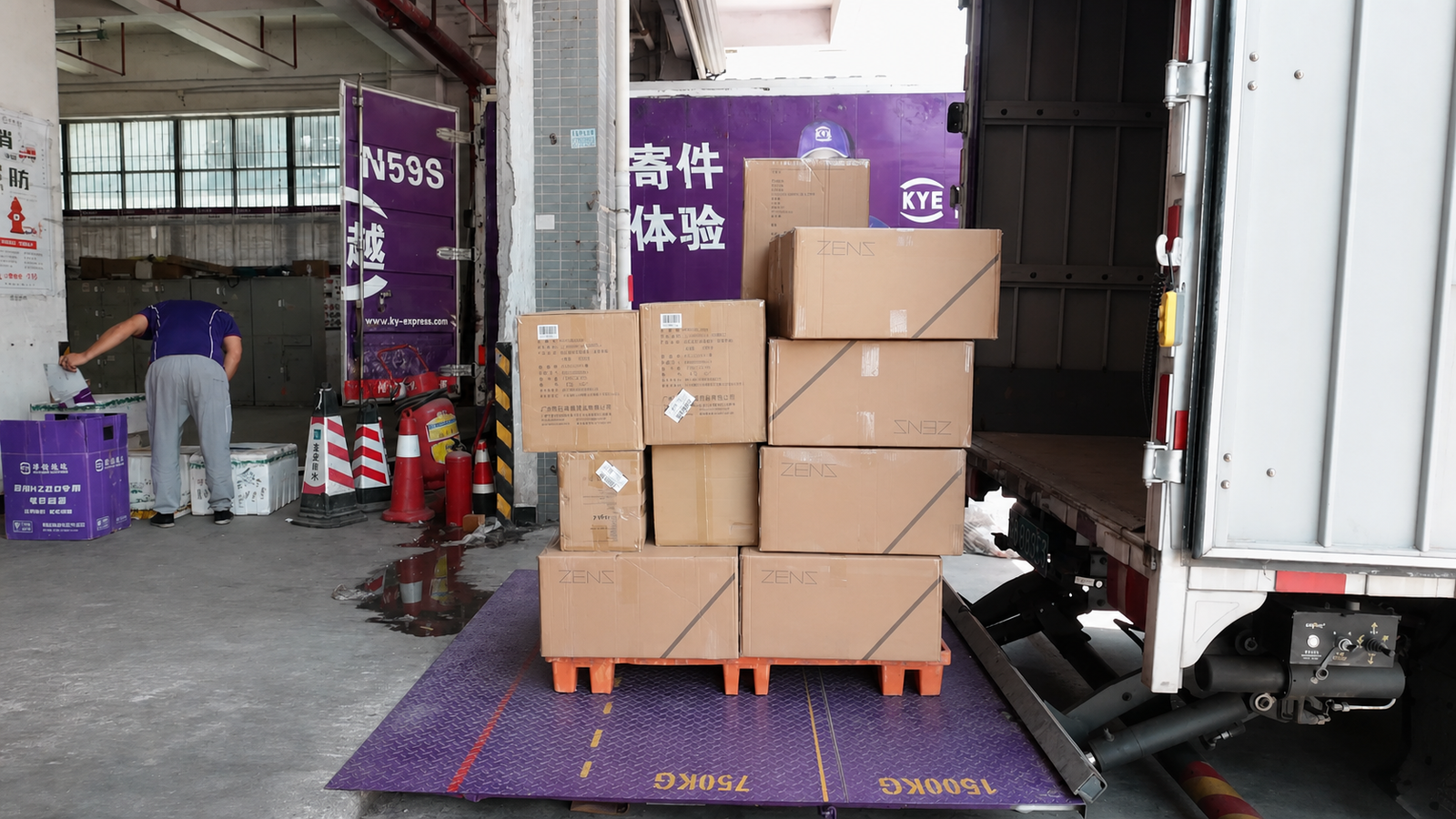
Key Insight: Operational availability does not equal technical uptime. A truck may sit functional in the yard yet still fail its route because the tail lift cannot handle the actual daily duty cycle.
The Hidden Cost of Unplanned Route Interruptions
When a tail lift fails mid-route, the damage multiplies fast. First, the driver loses productive minutes at every subsequent stop. Second, cargo handling turns manual and hazardous. Third, the entire delivery schedule cascades into delays. As a result, fleet managers face angry customers, overtime costs, and potential cargo damage claims. Statistical analysis demonstrates that route interruptions from liftgate issues reduce fleet-wide productivity by 18 to 22 percent on affected days.
Operational Efficiency Versus Technical Availability
Some fleet operators rely solely on MTBF figures for their purchasing decisions. However, MTBF data alone cannot capture operational reality. A liftgate may technically function yet still drag down route speed. Meanwhile, buyers who correlate purchase specifications with actual duty cycles achieve measurably better outcomes. Therefore, you must evaluate both the technical specification and the operational fit. You need a complete view of how the lift performs under real daily loading conditions.
1. Start With the Route, Not the Product Photo
A good buying process begins with the daily route. For example, a truck serving retail drops places different demands on the tail lift than a truck handling construction materials. Similarly, cold-chain delivery operations require faster cycle times than industrial parts distribution. Consequently, you must map the route profile before evaluating any liftgate specification sheet.
Six route factors substantiate your tail lift specification. First, measure average and maximum cargo weight accurately. Second, confirm pallet, roll container, carton, or machinery dimensions. Third, count the number of lift cycles per day. Fourth, assess whether the truck often works at sites without loading docks. Fifth, examine road and parking conditions during delivery. Finally, document driver operation habits and available working space at each stop.
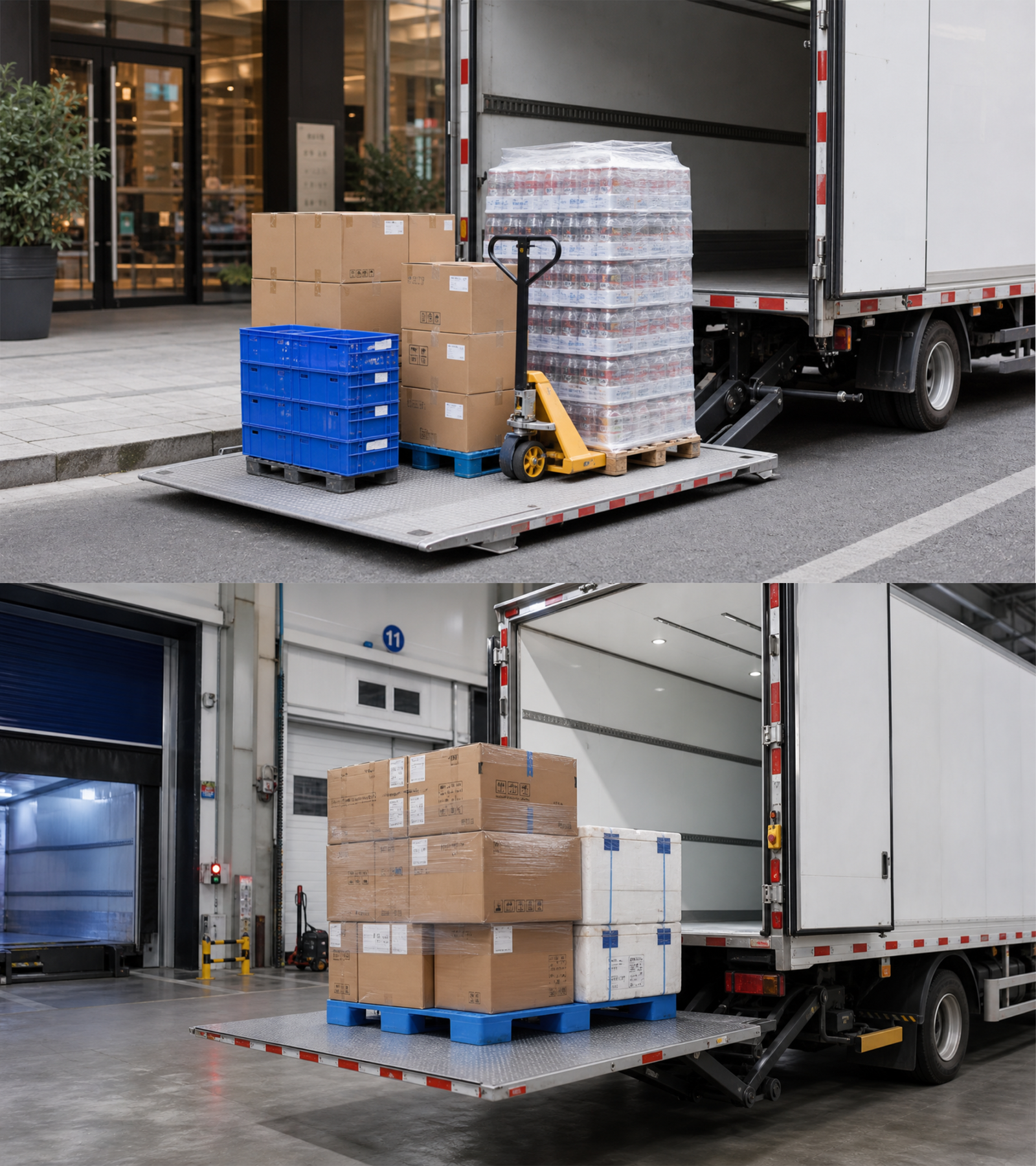
Key Insight: A model may carry enough rated capacity on paper but still fail the actual route. The platform may prove too shallow. The folded structure may block rear access. Or the vehicle body may lack the clearance for stable lift operation under real loading conditions.
2. Speed That Compounds Without Compromising Stability
Speed now dominates the liftgate market as a primary selling point. Specifically, faster lift movement reduces waiting time at every delivery stop. Notably, even 15-second savings per cycle accumulate into significant route-wide productivity gains. As a result, many buyers gravitate toward the fastest cycle-time specification they can find.
Speed alone, however, cannot deliver the final answer. Instead, you must ask whether the loading platform stays stable during repeated use. You must verify smooth lifting movement under load. Furthermore, you must confirm that the operator can control the load safely at every point in the cycle. In short, hydraulic tail lift performance depends on structural integrity, hydraulic system matching, hinge-point engineering, platform rigidity, and assembly quality. No single metric captures the full picture.
What Field Data Reveals About Duty Cycle Performance
Field data from logistics operations validates an important pattern. Notably, lifts that prioritize stability under asymmetric loading outperform faster but less stable alternatives. Additionally, hydraulic circuitry design directly correlates with smooth platform motion across repeated duty cycles. Therefore, buyers who evaluate both speed and stability together achieve higher route uptime. They avoid the trap of chasing headline cycle times that degrade under real-world conditions.
✅ Choosing Right: Benefits
Fleet buyers who prioritize stability alongside speed achieve measurable operational improvements.
- Stable platform motion reduces cargo shift risk
- Guided hydraulic circuitry extends component life
- Predictable cycle times improve route scheduling
- Lower MTBF-related service interruptions
- Drivers report higher confidence and faster handling
❌ Choosing Wrong: Consequences
Buyers who select tail lifts based solely on speed specifications risk compounding operational problems.
- Unstable platform motion damages cargo over time
- Poor hydraulic matching accelerates component wear
- Inconsistent cycle times disrupt delivery schedules
- Frequent MTBF failures inflate maintenance budgets
- Driver hesitation slows every single stop on the route
3. Correct Specification Prevents Expensive Downtime
A cheap or quickly available tail lift can turn expensive fast. Specifically, the wrong specification produces cascading costs across installation, operation, and maintenance. Moreover, medium-duty vehicle applications prove especially sensitive to platform depth, bed height, chassis clearance, power supply, and mounting conditions. Consequently, skipping the specification review creates a liability that compounds over every route cycle.
A folding hydraulic tail lift looks attractive on paper. It keeps the rear area open when not in use. However, the truck body must provide the right clearance. The loaded bed height must match the platform geometry. Otherwise, the platform may fail to unfold correctly. It may never reach the ground at the proper angle. As a result, what saves space in the brochure creates constant headaches on the actual route.
Key Insight: Five specification questions determine whether your tail lift delivers value or becomes a recurring cost center. Ask them before you order.
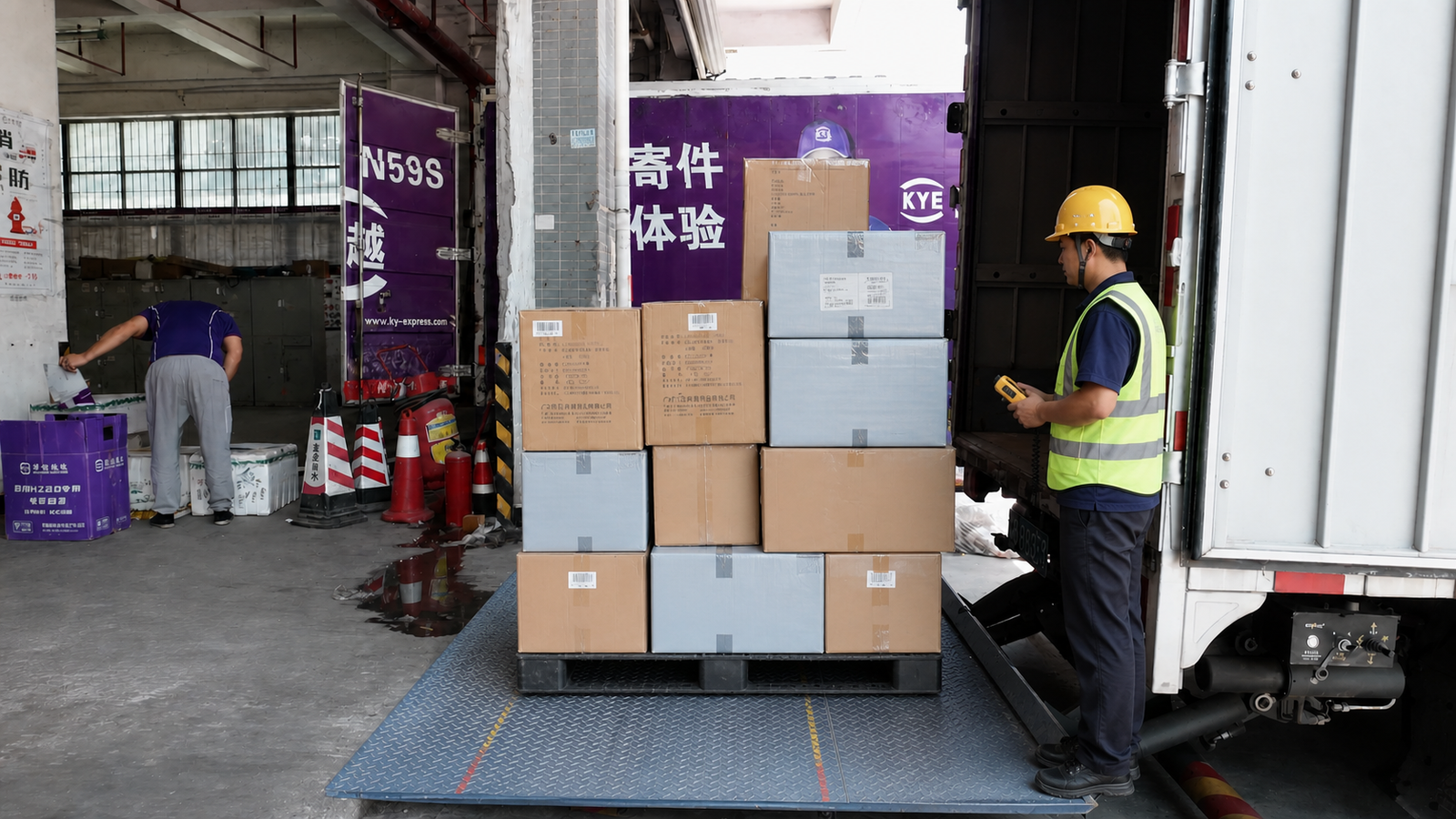
Five Specification Questions to Validate Correct Fit
Five questions validate correct tail lift specification. First, does the platform size support the real cargo dimensions, not just the rated weight? Second, can the lift operate correctly when the vehicle carries a full load? Third, does the chassis provide enough clearance for the folding or tuckaway structure? Fourth, can your service team inspect the electrical and hydraulic layout without excessive disassembly? Finally, does the lift design allow routine service without specialist tools or extended downtime?
4. Maintenance Access Is a Buying Feature
New liftgate products frequently promote lower maintenance requirements. However, smart buyers treat maintenance access as a specification item. They do not relegate it to an afterthought. In fact, field evidence demonstrates that maintenance-friendly designs reduce fleet-wide service costs by 15 to 25 percent over the equipment lifetime. Therefore, you must evaluate how easily your team can access critical components during routine inspections.
Hydraulic systems demand practical inspection access. Specifically, your technicians need to check oil levels, hoses, cylinders, control boxes, platform pins, weld points, and electrical connections. Furthermore, a well-designed liftgate reduces the time for routine checks. It helps fleet teams spot small issues before they escalate into route failures. Crucially, hydraulic circuitry that technicians can inspect visually saves hours of diagnostic labor compared to sealed or inaccessible designs.
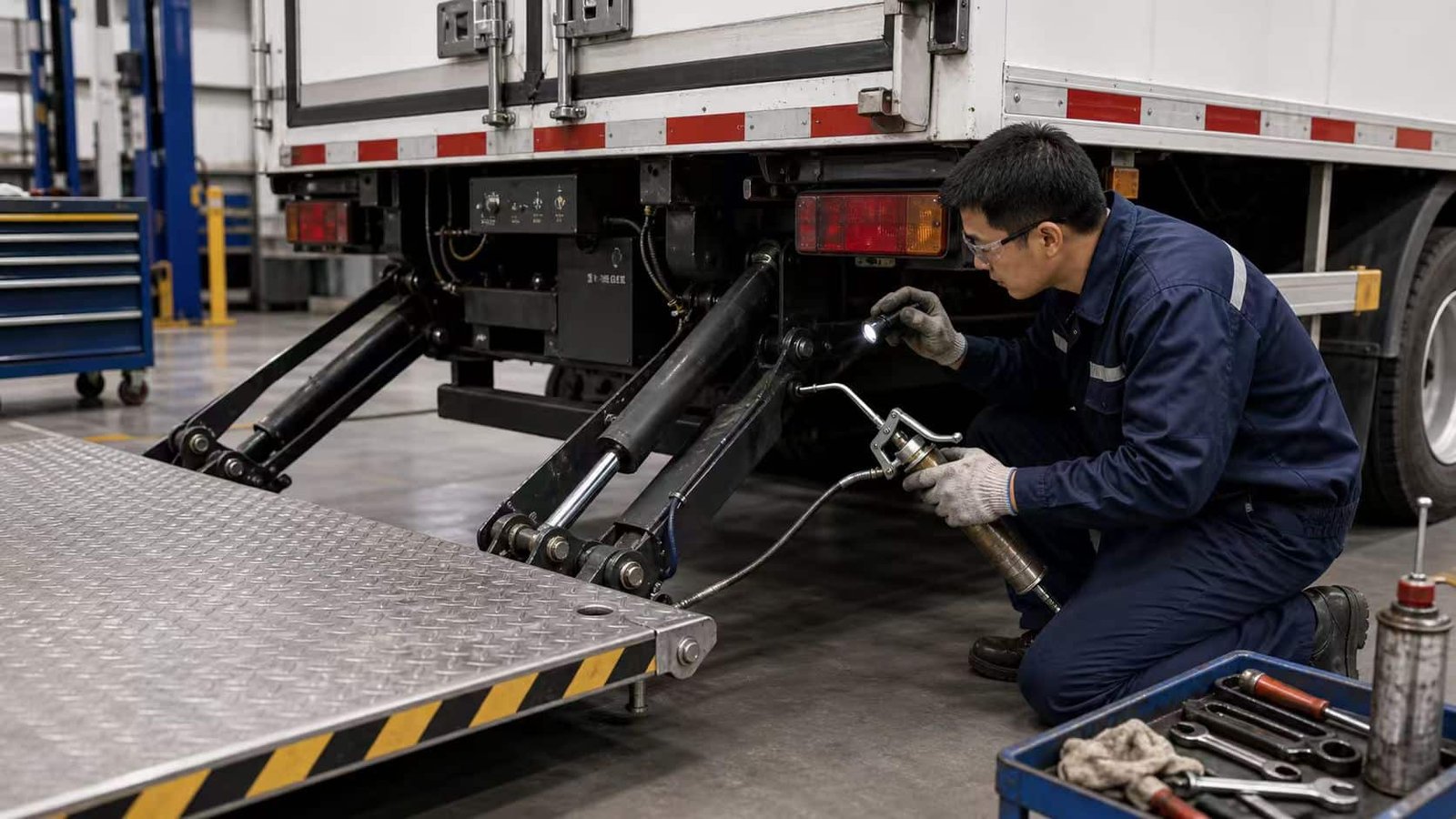
Key Insight: Maintenance access is not a convenience feature. It is a direct contributor to route uptime. Every hour saved on routine inspection translates into additional productive hours on the road.
5. Where Cadro Delivers Practical Value for Fleet Buyers
Cadro positions its hydraulic tail lift range around real operating value. Specifically, the product line delivers stable lifting motion, guided platform movement, compact folding structures, and reinforced load-bearing points. Additionally, Cadro engineering emphasizes welded structural integrity, precision assembly tolerances, and maintenance-friendly design logic. Consequently, fleet buyers who prioritize everyday reliability find Cadro solutions that match their operational requirements.
How Application Support Differentiates Tail Lift Manufacturers
When comparing tail lift manufacturers, focus on application support. Notably, the key question goes beyond whether a supplier can produce the lift. Instead, you must validate whether the supplier can match the lift to your vehicle and your specific loading application. Furthermore, you need confirmation that the supplier supports repeated logistics use over years of operation. And you need evidence that the design reduces maintenance pressure across the entire fleet lifecycle.
Cadro tail lifts demonstrate their value through measurable outcomes. For instance, the reinforced hinge design mitigates asymmetric loading stress across thousands of duty cycles. Moreover, the hydraulic circuitry layout enables visual inspection of all critical junction points during routine fleet service. Finally, the load-bearing capacity specifications correlate directly with actual daily loading conditions. Buyers receive not just a product but a complete specification-matching process.
Buyer Checklist: 6 Steps Before You Order
Follow these six validation steps before committing to any hydraulic tail lift purchase. Specifically, each step addresses a decision point that directly affects route uptime and long-term operating cost.
Confirm Real Cargo Dimensions and Platform Depth
Rated weight alone cannot validate correct specification. Notably, measure your actual pallet sizes, roll container dimensions, and equipment footprints. Then match those measurements to the platform depth and width. A mismatch here guarantees daily operational friction.
Check Loaded and Unloaded Vehicle Bed Height
Bed height shifts significantly between empty and fully loaded states. Additionally, verify that the lift platform can reach the ground at both conditions. Incorrect bed-height matching causes the platform to tilt under load or fail to deploy correctly.
Confirm Folding or Tuckaway Clearance Under Chassis
Folding designs save rear space but demand chassis clearance. Moreover, insufficient clearance prevents correct unfolding. The platform may remain partially deployed or strike the vehicle body during operation.
Review Expected Lift Cycles and Duty Cycle Requirements
Count your daily lift cycles accurately. Specifically, validate the manufacturer duty cycle rating against your actual route demands. Overshooting the rated duty cycle accelerates hydraulic and structural wear significantly.
Inspect Hydraulic and Electrical Service Access Design
Ask the manufacturer to demonstrate maintenance access points. Furthermore, confirm that your service team can inspect oil levels, hoses, cylinders, control boxes, and weld points without unnecessary disassembly.
Confirm Spare Parts, Installation Support, and Export Readiness
Verify spare parts availability and installation guidance before purchase. Additionally, if you operate across borders, confirm export documentation support. Choose stable long-term operation over a single attractive feature.
Frequently Asked Questions
Fleet managers and body builders often ask these questions before selecting a hydraulic tail lift. In short, the answers below address the most common specification and operational concerns.
How do I match a tail lift platform size to my cargo?
Start by measuring your largest regular cargo unit. Specifically, measure pallet width and depth, roll container footprint, or equipment dimensions. Notably, the platform must exceed the cargo footprint by at least 100 mm on each side. This margin allows safe loading without overhang. Additionally, consider cargo height and stability during platform movement. A lift with adequate surface area keeps loads stable through the full lifting cycle.
What is the most overlooked specification factor?
Chassis clearance consistently ranks as the most overlooked factor. In fact, buyers often focus on lifting capacity and platform size while ignoring the space beneath the vehicle. However, folding and tuckaway lift designs require specific clearance measurements. Furthermore, loaded bed height can reduce effective clearance by 50 to 80 mm. Therefore, always measure chassis clearance with the vehicle in both empty and fully loaded conditions.
How often should hydraulic tail lifts undergo service inspection?
Industry best practice recommends inspection every 500 to 750 duty cycles. Moreover, high-frequency routes with more than 30 daily cycles require monthly visual checks. Specifically, inspect oil levels, hose integrity, cylinder seals, platform hinge pins, weld points, and electrical connections. Additionally, hydraulic circuitry exposed to road debris and weather demands more frequent inspection cycles. Cadro designs prioritize accessible inspection points that reduce diagnostic time.
Can one tail lift model serve multiple vehicle types in a mixed fleet?
Some tail lift models adapt across vehicle types within the same weight class. However, you must validate matching for each specific vehicle. Specifically, check bed height, chassis configuration, mounting clearance, and electrical compatibility. Furthermore, mixed fleet operations benefit from standardization when the specifications permit it. Finally, Cadro offers specification support to help buyers determine cross-fleet compatibility before ordering.
What separates a quality hydraulic tail lift from a budget option?
Three factors differentiate quality hydraulic tail lifts from budget alternatives. First, welded structural integrity with reinforced load-bearing points. Second, precision hydraulic circuitry that delivers consistent platform motion. Third, maintenance access design that enables routine service without excessive disassembly. Crucially, budget options often compromise on hinge engineering and cylinder quality. These compromises produce visible performance degradation within the first 12 to 18 months of operation.
Build the Tail Lift Decision Around Daily Loading Reality
A well-matched hydraulic tail lift turns the rear of the truck into a dependable loading platform. Fleet managers, body builders, distributors, and OEM buyers achieve the best outcomes when they start from what the truck carries, where it stops, how often the lift cycles, and how easily the equipment receives maintenance.
Source Links
The following industry sources informed this guide.